Ending the Silence

stfmguestblogger's avatarSTFM Blog

Suzanne Leonard Harrison, MD Suzanne Leonard Harrison, MD

People are talking about domestic violence. Finally.

One good thing that has emerged from the media attention with domestic violence and the NFL is that people are talking about it. During the week following release of the Ray Rice video it was all over the national news, making it easy to engage both men and women in conversations about domestic violence. While the video was playing on a television in a Texas airport, I asked a young man what he thought about it. He looked directly at me and said, “I don’t think you want to know what I think.” After I assured him I did, he shared some very negative remarks about men who perpetrate violence against women. The significance for me was that it was easy to engage a man I had never met in a meaningful conversation about domestic violence. The National Domestic…

View original post 419 more words

Communicable Diseases: Get a Flu Shot

Once again, we are in the midst of a public scare over a transmissible disease. The list of such diseases is extensive. Ebola is the one in the news.  I spent the week fretting over a communication to our university community.  A few weeks before this, I was nervous about the success of our flu shot clinics.  They were an overwhelming success.

I have also been involved in developing a proposal to get hand sanitizer dispensers placed strategically over the campus. It is a waste of effort to clean down the desks after each class.  Though Ebola is easier to remove from surfaces than cold and flu viruses. The best solution is clean hands. Most people are not mindful of the need to wash their hands or cover their coughs and sneezes.  This was graphically pointed out by one of my students. He witnessed another student sneeze into his hand and walk over to shake his buddy’s hand.  I spend most of my day handing patients tissues and demonstrating how to cough into the elbow.  I have signs everywhere.  I am admonishing students who go to class with a fever.  They fear the wrath of our policy on missing classes and exams.   They opt to risk spread of an illness. It is true of most of us.  No one wants to take the time to be “sick” which means voluntary quarantine.  Even healthcare workers treating Ebola patients do not want to take 21 days out of their life to monitor themselves for symptoms.  The argument is no one will volunteer if they have to relinquish six weeks: three of volunteering and three in quarantine. If I could spend 3 weeks in my place, I would read, catch up on writing and finally clean the basement.

This has been a busy year so far. We have norovirus on cruise ships, enterovirus in daycare, and let’s not forget the usual colds, strep throat, mumps, chicken pox and all those food-borne illnesses  All prevention starts with good hand washing.

If I was in charge, the Flu shot would be mandatory for everyone. Influenza is preventable and over the years, I have heard so many excuses that a few years ago, I just starting saying to patients” That is not true. There is no evidence for that.” Not to be disrespectful, but to start a more informed dialog about the merits of getting a vaccine for a vaccine preventable illness.

One year working as a medical director of a Nursing Home, we had a nation-wide vaccine shortage. One employee came to work with early flu symptoms.  The vaccine supply was late getting to our patients and we had an outbreak of influenza.   I became aware of the risk of death that comes with the illness in the elderly.  We lost a number of patients to pneumonia.

I work with college students. I can’t make the flu shot mandatory but I can say that getting the vaccine prevents lost days from classes, missed examinations and can affect the final grade.  For the first on-campus clinic, we gave out over 300 vaccinations.  I hope that parents encouraged their kids to get vaccinated.  Basically, we need to take time to be sick and not expose others to illness. What’s so bad about staying home and just eating chicken soup and drinking hot liquids wrapped in a warm blanket on the sofa.

One of my colleagues has a blog that shares some important scientific information on Ebola.

Domestic Violence Awareness Month

“Domestic Violence Awareness Month evolved from the first Day of Unity observed in October, 1981 by the National Coalition Against Domestic Violence. October has been targeted to educate the public about the Domestic violence.” Domestic violence or intimate partner violence (IPV) is the leading cause of injury in women.  Intimate partner violence is a criminal offense.  It is defined as “actual or threatened physical or sexual violence or psychological/emotional abuse.”  Intimate partners include “current or former spouses, boyfriends, and girlfriends (including heterosexual or same-sex partners).”

Unfortunately, even with all the NFL scandal, our major TV News outlets missed an opportunity to highlight this issue during Domestic Violence Awareness Month. They opted to cover and raise money for Breast Cancer. The good news is that the overall rate of is declining but not fast enough

Each year more than 10 million men and women are victims of physical violence by an intimate partner. Intimate partner violence is seen as a criminal offense but it is also a medical problem.  Both the victim and the perpetrator would benefit from early detection and appropriate intervention.  Early detection and treatment requires a team approach involving health care providers, law enforcement agencies, mental health providers, and local agencies that assist the victims.

Acute medical conditions associated with intimate partner violence include: concussions, bruises, cuts, fractures, trauma due to rape, exposure to sexually transmitted diseases, unwanted pregnancy, injuries during pregnancy leading to complications such as miscarriage and premature births. Chronic illnesses that result from intimate partner violence include: depression, post-traumatic stress disorder, chronic pain syndrome that include headaches, gastrointestinal and pelvic complaints.  Chronic hepatitis and HIV infections may occur.

Unfortunately, I have seen it all. One patient kept returning to the office with a positive chlamydia test. Her partner was not getting treated and kept forcing her to have sex. His rationale was that if she had an STI no one else would want her.  Another patient would have repeated admissions for seizures because her husband threw away her seizure medication.  One memorable patient would always leave before being seen for her appointment to prevent her partner from knowing she left the house.  Being late would expose her to physical harm. With the help of our local agency, we were able to get her to a shelter.

Intimate partner violence affects women more often than men and has become the leading cause of injury to adolescent women.

http://www.futureswithoutviolence.org/userfiles/file/Children_and_Families/DomesticViolence.pdf

http://www.futureswithoutviolence.org/userfiles/file/Children_and_Families/Reproductive.pdf

Over the years I have witnessed that despite the physical and emotional pain, many women stay in dangerous situations for fear of retaliation from their abusers. Unfortunately when women try to leave these situations, they may be at risk for severe or life-threatening injuries.  One patient was locked in her in bedroom during the day until her partner returned from work. Another was forced to travel with her husband when he made cross country hauls in his truck for years.  Many women are faced with the cultural and financial constraints of leaving these relationships.  Many states do not offer adequate and safe shelter systems, medical and psychological care, or assistance with legal matters.  Many women get frustrated and feel abused by the system.

Each year as many as 10 million children in the United States witness intimate partner violence in their families. For children, witnessing violence can lead to long-term problems, which include alcohol and substance abuse, mental health problems and perpetrating or being a victim of intimate partner violence.  Violent partners usually abuse the children.  Abused adolescent females are more likely to drop out of school, have unwanted pregnancies and suffer physical abuse during pregnancy.

Statistics from 1998 show that only 59% of women reported intimate partner violence to the police. Despite all the information being provide, that number is now about 55%. Intimate partner violence accounts for 36% of all injury-related emergency room visits in women.  Women fail to report the cause of these injuries because of shame, prior insensitive responses from friends, family and health care providers, and a sense of hopelessness. IPV accounts for about 8.3 billion dollars/year in health care expenses.

Thankfully Congress did pass the Violence Against Women Act. The President signed the Proclamation to keep the month of October as Domestic Violence Awareness Month.

October is Domestic Violence Awareness Month

<a href="http://The National Intimate Partner and Sexual Violence Survey (NISVS) infographic” target=”_blank”>

August Meeting Recap: Organs!

Another wonderful meeting.

therealtinlizzy's avatarTheLadder

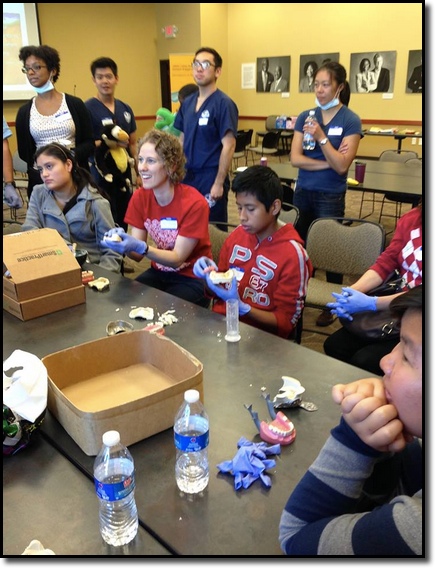
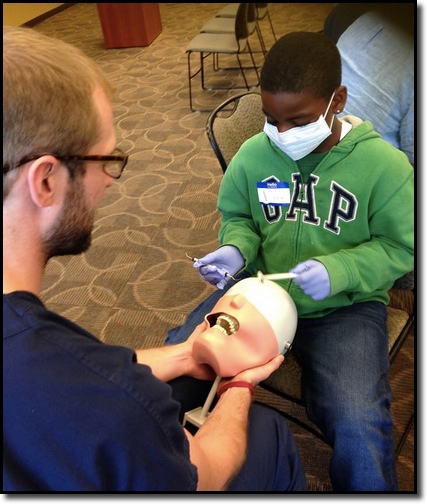
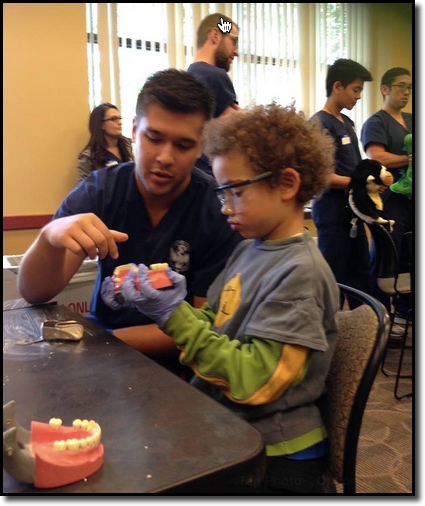
August’s meeting of the Ladder centered on organs and organ systems. Some special guests dropped in to provide hands-on anatomy & physiology learning for our medical scholars:

organModels_border

However, Ladder meetings aren’t just about packing useful information about health, medicine and healthcare careers into our young scholars’ brains. We provide opportunities for Ladder scholars to develop their critical thinking and communication skills, to share their stories and perspectives, and to build connections with their peers, elders and those younger than they.

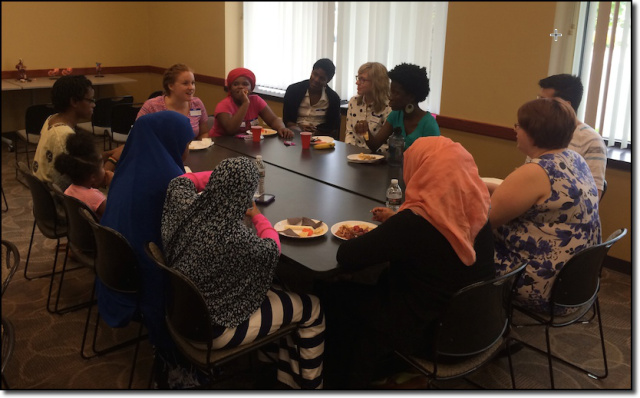
One of the first activities scholars participate in at each meeting is sitting down for lunch in small groups, introducing themselves to each other, and sharing how others’ words of wisdom may be relevant to them.

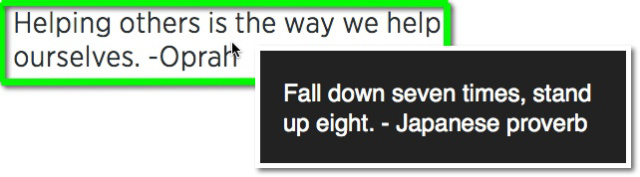
intros These are the quotations scholars pondered and shared their thoughts on this month:

quotes

After lunch, scholars rotate through stations which include many types of hands-on learning, such as: computer applications and tutorials on health & medical…

View original post 161 more words

Labor Day Weekends

When I entered Medical school the concept of summer vacation ended. My new year started at the end of May or June. Residency started on July 1. So I stopped having the traditional summer vacation. When I first started private practice in 1996, I moved to a new town, took my specialty board, started a practice and discovered YMCA summer camp for our son.
Summer was busy with physicals for school and camp, GYN exams, adult physicals and community projects. We altered our schedule so my staff could make all of the Little League Baseball games and we were a team sponsor. Also, it was busy in the hospital because of heart attacks, strokes and accidents. The office had the usual summer accidents and illnesses. I always managed a few days off around Labor Day, after everyone was back in school. I love this weekend. It is that transition for me from the hectic hot summer to fall. I know, technically it is still summer.
I started in Academic Medicine in 1996. I spent the summer orienting myself to my new position and helping the new residents. For 6 years, I went through the stress of the new interns and helping the senior residents adjust to their new roles supervising the interns and assuming more patient care responsibilities. It was exciting and stressful. I had many sleepless nights. Then after making it through July and August, I was off for Labor Day weekend. I have fun memories of Virginia Beach, Norfolk, Williamsburg, and Atlanta.
One year, we took a two-week vacation in August 2004 at the insistence of my practice manager or maybe it was a direct order. We got in the Buick Riviera and drove to Birmingham and saw family. We drove back and stopped in South Carolina, and then Virginia Beach and Williamsburg. We had the music and blasting. My son enjoyed every moment. We have a rule about staying in hotels, stopping at malls to rest and eating in restaurants. It has always kept us safe on the road. On that trip, I got my hair braided and decided to go natural. It was a shock for many people, especially my staff and my patients. I haven’t looked back in now 20 years.
For several years, I had a position that required me to be on call every day for two years and I spent three Labor Day weekends on call. It was total disruption for us. We did not go anywhere. I think I secretly mourned the loss of that time away. For the past three years, it is mine again but now my husband is the one working on the Saturday and we can’t go away.
This past summer was no exception for me and I spent it anxious about a new electronic health record implementation and feeling overwhelmed. Now this Labor Day, I am relaxing. I walked with my friend. She did 2.3 miles and I did about 4.6 miles. I have decided to walk 5 instead of running 3 and maybe prevent long-term knee problems.
On Saturday, we watched one of our movies from the TCM Tennessee Williams movie collection “Night of the Iguana” directed by John Houston. I also have  “Sweet Bird of Youth” and “The Roman Spring of Mrs. Stone.” My husband surprised me with a copy of “Belle.” This one I watched Sunday night. It is a powerful movie. I especially liked the “extras” on the DVD that tell the story behind the writing of the screenplay.

Happy Labor Day!!!

The Next Generation of Care Providers

Every month that I post the latest update from “The Ladder” I smile at the amount of fun the kids are having. They are being introduced to physical exam and radiological tests I did not see until  I went to medical school.  They are smiling and I was terrified. I can only hope that some of the kids go on to become health care professionals. They are the future doctor, nurse, physician’s assistant or radiology technician. Medical schools are expensive in the United States. So a physician’s assistant (PA) or a nurse practitioner can be a rewarding career with less long-term student loan debt. The first hurdle is to stay in school. They need the encouragement to struggle through math and science and not get discouraged.
Recently I had an opportunity to refer one of my patients to a former resident. He has a sports medicine practice. I remember the first and last day of his residency and the joy I felt when he matched into his fellowship. Last week I had a patient with a serious problem that required hospitalization. The specialist called and gave a detailed overview of her findings. After she was finished, she asked me “are you Dr. Washington who taught Family Medicine at UMDNJ or I mean Rutgers.” I confirmed that I was indeed that Dr. Washington. The specialist said “I was your student. You were my doctor. Can you believe I am an attending now?” I can believe because she was a hardworking student.
In the doctor’s lounge, I ran into a new Geriatrician. She just finished her fellowship and she was my student. She too remarked “Can you believe I am an attending?” I had an anesthesiologist tell a colleague he was my student. I looked through all the letters I have written that are in a file marked “Student Letters.” They are all now Family physicians, OB/GYN’s and Internal Medicine specialist. They were all compassionate people before I met them. During their training, I helped build self-confidence and fine-tune an oral patient presentation. I edited a “Personal Statement” for a residency application and even wrote a “Letter of Recommendation.” I felt that was the least I could do to launch a new career. I listened as they struggled with which programs to rank. We weighed all the options and can up with a rank list. I wanted to make sure their choice was the best one. I listened as they struggled with personal and family crises. I was so careful to make sure I was of help. They all did well. I have seen poster presentations and been present to hear lectures that some of them have presented at national conferences.
I helped a student recently prepare for her interview for residency program the week before her first interview. She matched at the program she wanted. I hope to do the same for another young woman I have mentored who just finished her second year of medical school.
I don’t worry about who will take care of us in the near future. I just wish we could get more of them out there. That’s why I have a smile each month when I post the latest update from “The Ladder.” These kids are our future. We just have to keep them excited about their education and provide the “ladder” for success.

How a Great Idea and a STFM Fellowship Empowered Underserved Children to Pursue Health Care Careers

stfmguestblogger's avatarSTFM Blog

Renee Crichlow, MD, Renee Crichlow, MD,

“What do you want to be when you grow up?”

My parents always asked me this. I learned later that this was about creating a vision and expectation of the future.

Now I am Dr Renee Crichlow, a family physician working and teaching family medicine in underserved North Minneapolis, and I ask every child I see, “what do you want to be when you grow up?”

Many answer doctor or nurse and yet in the medical school and the residency applications I rarely saw any kids from the neighborhood. My co-worker Shailey Prasad, MD, MPH, and I knew this was a complex problem not to be solved overnight.

We decided with the support of our department chair, Mac Baird, MD, MS, to build The Ladder, a structured health care pipeline mentorship program that incorporates hands-on science fun with values and character development designed to facilitate the development…

View original post 493 more words

July Meeting Recap: Infectious Disease!

Another exciting month

therealtinlizzy's avatarTheLadder

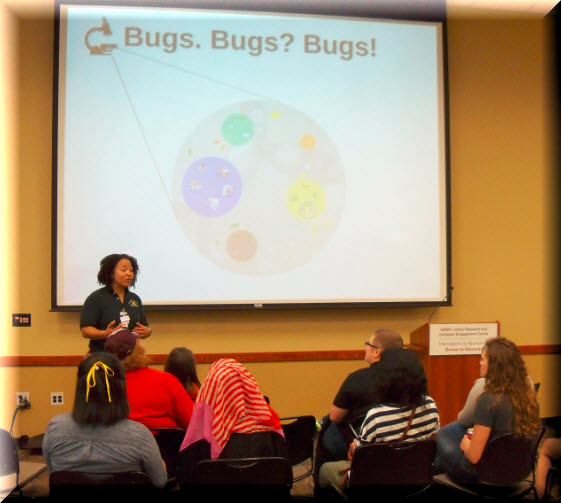
July’s meeting of The Ladder brought together medical scholars of all ages to the UROC in North Minneapolis to learn about infectious disease. In addition to learning about different varieties and causes of infectious disease, we learned about those folks in medicine & healthcare who play roles in helping prevent and treat infectious disease, and conduct research that informs everything we know about infectious diseases.

bugs

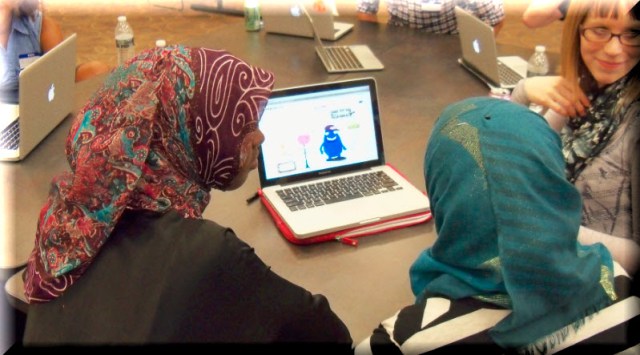
Scholars learned about a variety of diseases caused by bacteria, viruses and parasites, as well as how some diseases are spread and prevented.

laptopLearning

Medical scholars participated in an exercise to illustrate how some infectious diseases are spread by physical contact. In this exercise all scholars received test tubes filled with clear liquid, but one scholar’s test tube contained a special, but invisible, substance (a liquid with a pH greater than 7.0 – no actual infectious diseases were involved!!!). Scholars then exchanged small amounts of fluid from their and a few others’ test…

View original post 151 more words

Devoted Husbands and Fathers

I have known such great men over the years. Most were patients I have cared for. So many of them I met because their wives pushed them in to the office. When they finally got there, they often shared why they were so reluctant to come. Many thought I was just this kid and I had to win their respect with my skill. Once accomplished, they came in and confided in me.
They appeared to be healthy hard-working husbands and fathers. I, unfortunately, diagnosed quite a few with untreated hypertension, cancer and diabetes. It can be the hardest thing a man does when he admits he has an illness. I found what I though was just a cyst on a patient’s back. It turned out to be metastatic kidney cancer. He was so strong through the ordeal. Most concerned about his wonderful wife. She was my patient. It was not a long illness and he had no long battle. We did not have many treatment options.
My favorite couple was one of my most tragic cases. Mr. C ‘s wife had multiple medical problems. Through it all he was there. She developed a blood clot in her leg and then we finally diagnosed cancer of the kidney. We transferred her to the University Hospital but she died during surgery. He was devastated. Every visit was not about his medical problems but about the loss of his wife, soul mate after more than thirty years of being together. He was comfortable enough after all this time to reveal how lost he felt. He was overwhelmed by the advances from women who wanted to take his wife’s place. He was surprised because many of them were her friends. I tried to be helpful and not offend him. I told him he was such a good husband that they wanted to have the same loving relationship. He was not ready. I found myself giving him tips on how to handle these lovely church ladies many of whom I knew because they were patients or I knew them through my work in the community. He would just say “She was a beautiful woman and no one can replace her.”
One of my colleagues, Dr. S, entrusted the care of his beloved wife to me. It was a compliment but I felt I had failed the first time I admitted her to the hospital. I soon learned that he had been taking IV bags on vacations just in case she had a problem. She had decided he needed support. She was devoted to him. She would tell me stories of the old days when doctors lived in the hospital housing. She was a nurse and that is how they met. She held the family together while he was always in the operating room. They lived on what she earned because residents had meager salaries at that time. He was the beloved surgeon. She had managed his office and his life. When she died, I remember telling him to take care of himself. He had retired. His daughter-in-law hugged him and said that was her responsibility now and she was honored to do it. He had been there for everyone.  He planned to leave no money for his children and they knew that. He made sure that he and his wife had everything and she enjoyed life. They gave to the community and he would never complain if a patient had no insurance. He left his children more than money, it was a legacy of his hard work and total love and devotion to them and his community.
Mr. A cared for his wife who was disabled and in a wheel chair after having a stroke. He was a devoted caregiver and thankfully he had help from his family, friends and a home health aide. His wife had been a dynamic women and quite fashionable. At each visit, she was dressed in one of her many stylish outfits and always her favorite perfume, jewelry and a hat. When his wife died, I was concerned that he would just give up. I think his friends and family felt the same way. They all came to her funeral and made sure he knew that people loved him. He was showered with requests for him to visit friends and relatives all over the country. Those making the request went one-step further and sent plane tickets. The first few months he traveled. They all managed to keep up their active support for a number of years. He thrived with the attention. His faced glowed with gratitude.
We always think the smoker will get lung cancer.  Sometimes, it is the innocent one who spent all those years saying, “Please stop smoking.” Finding out that the lung mass in the non-smoking wife is cancer can be devastating to the family.  When that cancer is one typically associated with second-hand smoke exposure, it is especially hard. She died from her cancer. He had to go on and struggle through her loss and unfortunately, emphysema. His daughters took care of him because he was a loving father and husband.
Fathers Day is a time to honor those men who love and support their families. I remember admitting a dad who had developed pertussis (whooping-cough). The Pediatrician admitted the infant daughter. He was so upset that he had been the one to make his child sick. We explained this can happen. Back then it was a few cases and now there are more.
Loving husbands and fathers make a difference during difficult times. My husband spent many days taking our son to the Pediatrician alone for shots. It was difficult for me to get away from my training and later the office. He did the soccer games, tennis lessons and all the homework. He was the Book Fair volunteer; he and another Dad would make sure the kids made smart book choices. He was the chaperone on the school trips. He made all the visits to the orthodontist for braces, found the Barber for the haircuts and scheduled the music lessons. He cooked all our meals and even did the laundry.

Happy Father’s Day!!!!