March Recap: The Brain And Nervous System!

They are having so much fun.

therealtinlizzy's avatarTheLadder

At the March session of The Ladder, medical scholars had the opportunity to learn about the brain and nervous system. But before getting down to the medical science fun, scholars split into smaller groups so they could get to know each other a bit over lunch:

The thing about The Ladder, besides being an awesome medical science and career educational program for North Minneapolis youth, is that Ladder scholars of all ages not only get to be mentored by the more experienced scholars but also get to be mentors themselves to those younger or less experienced. Everyone has the opportunity to learn from others, and everyone has the opportunity to teach others.

For example, here – veteran medical scholar Caleb demonstrates to a new scholar a web application that tests cognitive & visual reaction times.

Young scholars learned about the anatomy and function of the brain and nervous system as well…

View original post 194 more words

International Women’s Day: A tribute to my friends and colleagues

March 8, 2015 is International Women’s Day.  The theme is “Make It Happen.” The women I have had the pleasure to know have always made it happen.  I want to highlight my many female physician colleagues.  They are from every medical specialty.  We all went to very different medical schools but our paths were similar.  They are in leadership positions or just stepping down and entering into a new career phase.  They are finally enjoying grandchildren, caring for aged parents or just taking the time to enjoy life. It is hard to believe I have known them all for over 25 years.  Over this year, I will profile some of these remarkable female physicians,

They have been role models for a generation of women.  Dr. M, a pediatrician, who I have known since I was a resident, is now caring for the children and even grandchildren  of many of her patients in a practice that is still  in her home.  Her place in the community has allowed her to be a physician, mother, friend, and teacher.

Dr. P, I met when I was rotating at the now closed children’s hospital. It was an inner city hospital that was on the forefront in the care of children life-threatening illnesses and the pediatric AIDS epidemic.  She is an Adolescent Medicine Specialist and book author.  The Adolescent Clinic provided primary care for teens specializing in AIDS care. She was a successful grant writer and many times was juggling multiple budgets successfully and writing research papers to keep the funding stream coming.

Dr. D was the first person to make sure I was welcomed when I joined my residency. She also stood up for me. She is the smartest person I know.  She went back to medical school at age 40. Her father was the first African-American physician allowed on staff at the hospital where we were training.  He was so proud the day she joined his practice.  It was a solo –practice in the home she grew up in.  She still has a practice there.  I have such pride in her resiliency.

Another colleague, Dr. C, from our residency just sold her practice to a large group.  Her practice was the first practice owned by an African-American female acquired by this large group.  Her goal was to have a successful practice and she wanted to integrate other like practices but many doctors did not share her vision.  She has a holistic approach to patient care. She did not give up but held onto her goal when she was working long hours.  Now her practice is expanding and not dying from the inability to recruit new physicians.  She is planning to get an MBA and continue to be a force of change.

The first few days of medical school would have been overwhelming but I was fortunate enough to meet Dr. V.  She has been my friend for over 30 years.  She is a dynamic person and an excellent physician.  She has a holistic approach to care and is fearless. She is now in transition by still fearless.  I am in awe of her courage to take a new direction in medical care.

So many of the women physicians I know are caring physicians, mothers, and wives; make significant contributions to the medical field and their communities.  We run and walk miles for all causes from breast cancer to heart disease.  We lecture in the community at schools and churches and spend hours volunteering for our professional and social organizations.

One of my male colleagues once said “the best thing that happened to medicine was when we made it easier for women to join the profession.”  Woman all over the world are making a difference and many at the risk of their lives.  I am inspired by each one of them and  honor their courage, persistence and dedication.

Caring for Patients: African American Women and our Hair

There was a firestorm over remarks made when a young star Zendaya showed up with thick braids on the red carpet.  She was beautiful but a fashion critic made a thoughtless comment about her Locs.   Lupita Nyong’o and Viola Davis wore natural styles and the Selma director Ava DuVarney wore Locs.

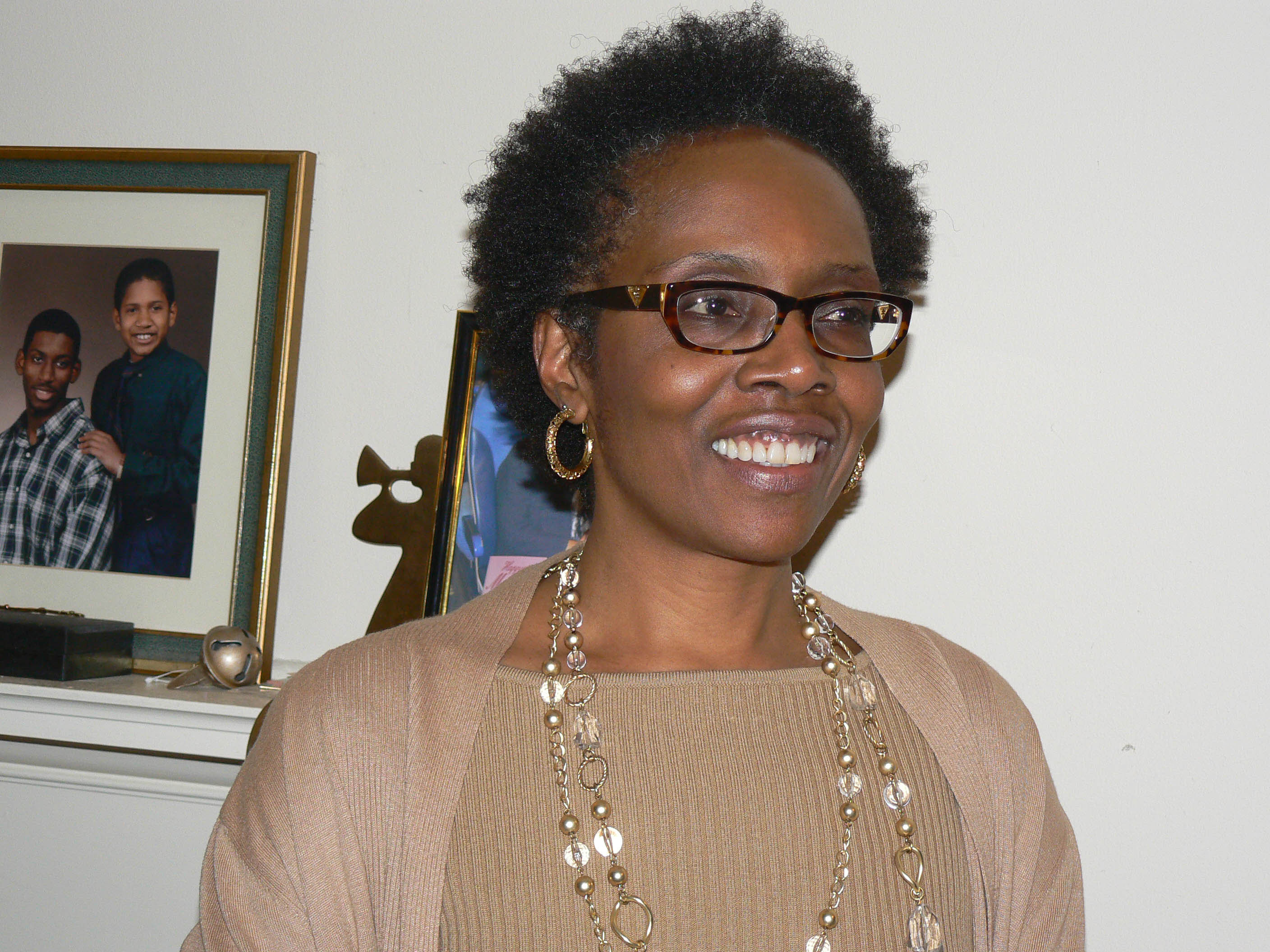
Over the years, I made my own transition from the hot-combed hair of my teen years to the permed hair of my 20’s to 30’s to the transition to my natural hair in 1994. The freedom to start thinking about exercise and worry less about my hair allowed me to run and sweat.

Judy4Judy 4P1010252

I have treated my share of what I call “hair catastrophes.” They were due to the common things we black women do to our hair every day.  Burns caused by dropped hot combs and slipped curling irons were serious.  They healed but left scars.  Chemical burns from lye-based and non-lye permanent kits were the most distressing.  The temporary hair loss was heart-breaking for the patient.  Even Oprah Winfrey was a victim.  In the debut of the  first show she is sporting an Afro.  I remember that show. She has talked openly about what happened.

Hair braiding caused hair loss in young girls.  This was caused by pulling the braids too tightly to make a neat row but pulled on the root of the hair so the hairline receded.  This is called Traction  Alopecia. Some women also got severe scalp reaction to the hair used in extension for braids.  It affects the scalp and the face.  I experienced this condition with my braids.  Since that experience, I refuse to add any natural or synthetic hair that isn’t mine to my head.

Hair weaving also has its problems.  If not done correctly, a woman’s own hair can be damaged. Usually corn rowing and adding the hair is the best method.  It has to be cared for by a professional to prevent fungal or bacterial infections of the scalp.

Women also lose hair due to autoimmune diseases.  Patchy hair loss on the scalp or total hair loss from the scalp and body is distressing.  One patient thought she was allergic to her weave but with the help of the dermatologist, we diagnosed Alopecia Universalis.  Alopecia Totalis is hair loss from the scalp alone. This was not the case for her when we noted loss of eyebrows, pubic hair, axillary and hair from the arms and legs.

After menopause, many African-American women develop Alopecia Areata.  This is the same hair loss pattern men develop.  You either wear a wig or just go natural.  The women in my family who have this condition wear wigs.

The debate this week was much-needed.  Everyone weighed in from Solange to Michaela Angela Davis.  The point is that from now on you will see more natural hair because more women of color are breaking barriers and feel free to display non-permed, non-weaved, and non-wigged hair. You will see short afros , natural curls and locs, This is an important change because we are redefining how we talk about beauty especially on the “Red Carpet.” Now, it has to translate into movies and TV. Thanks to Viola Davis in How to Get Away with Murder and  Tracee Ellis Ross in Blackish we are seeing a breakthrough. Lupita Nyong’o in those Lancôme ads is ground-breaking for all women of color all around the world..  As a physician, it is important because of the medical implications.

Happy New Year. Good-bye 2014. Hello, 2015.

2014 was a challenging year. The weather stressed us all out. Every meeting I had was cancelled and rescheduled due to the snow.

In March, I hosted the family Easter dinner at my home.  It was a grand event. I cooked crawfish etouffee in honor of Aunt Tommie. I made her Gumbo again this year. She died from complications of Alzheimer’s just after Easter. We had a beautiful memorial service a few weeks later.

In May, I attended The Society for Teachers of Family Medicine meeting in San Antonio Texas. I was the moderator for the closing session and it was my final year serving on the program committee. Roy and I  drove to Austin and then to Dallas. We spent a few days with his sister and her husband in Irving.

June was a spectacular month. We traveled back to Birmingham for the Second Annual Giddens Family Reunion.     .

Like many of you my  heart has been so heavy after all the events over the summer. I have been posting  updates on the police shootings and protests. All the news coverage on the NFL and domestic violence was upsetting.  The news coverage on the deaths of the  police officers failed to emphasize the fact that the shooter suffered from mental illness.   It points to some upsetting truths about views on African-American males. Mental illness is either misdiagnosed or ignored.

I went way too long without a vacation after my last trip,   I spent the entire summer working on several projects. . In December, we spent a few days in Ocean City Maryland.  The weather was beautiful. We went to Assateague Island to see the wild horses. We traveled once again for Christmas. Fortunately, we spent New Year’s Eve at home trying to stay awake.  I made it.

Here’s to 2015.  In May, it will be 40 years since I graduated from Woodlawn High School. The Class of 1975 held the first integrated Senior Prom in the Gymnasium. In June, we will celebrate our 30th wedding anniversary. It will also mark 25 years since I graduated from Residency and passed my first Family Medicine Board. I started my practice in Cambridge MD that year.

I hope that this year will bring enlightenment and a more intelligent discussion on race in America. I am looking forward to seeing “Selma” and Kevin Costner and Octavia Spencer in “Black or White.” These two movies highlight some important facts about race, civil rights and how much we all have in common. Also important is the fact they highlight what we can lose if we refuse to understand and support each other. We can lose our right to vote, die at the hands of someone who only sees the color of your skin and fears you.


October Session Recap: Dental Day!

Another exciting montha

therealtinlizzy's avatarTheLadder

October’s session of the Ladder was led by the fantastic folks from the University of Minnesota Dental School!

drwarren2

Our young medical scholars had the opportunity not only to learn about dentistry but also to have hands-on experience in aspects of dental practice. Above, scholars learn how to make dental impressions; below, one of our scholars gets a feel for using a dental scaler on patient model.

dentalDay

Here, one of our senior dental scholars teaches the day’s youngest scholar about dental physiology:

youngestScholar

Tell the young scholars in your life, family, school, class and neighborhood about The Ladder – where they can not only develop goals for the future, but be actively supported and challenged to pursue those goals by mentors and resources from the University of Minnesota Academic Health Sciences schools & colleges, the North Memorial Family Medicine Residency Program, and Broadway Family Medicine. In addition, young scholars will be learning along side and supported…

View original post 68 more words

Ending the Silence

stfmguestblogger's avatarSTFM Blog

Suzanne Leonard Harrison, MD Suzanne Leonard Harrison, MD

People are talking about domestic violence. Finally.

One good thing that has emerged from the media attention with domestic violence and the NFL is that people are talking about it. During the week following release of the Ray Rice video it was all over the national news, making it easy to engage both men and women in conversations about domestic violence. While the video was playing on a television in a Texas airport, I asked a young man what he thought about it. He looked directly at me and said, “I don’t think you want to know what I think.” After I assured him I did, he shared some very negative remarks about men who perpetrate violence against women. The significance for me was that it was easy to engage a man I had never met in a meaningful conversation about domestic violence. The National Domestic…

View original post 419 more words

Communicable Diseases: Get a Flu Shot

Once again, we are in the midst of a public scare over a transmissible disease. The list of such diseases is extensive. Ebola is the one in the news.  I spent the week fretting over a communication to our university community.  A few weeks before this, I was nervous about the success of our flu shot clinics.  They were an overwhelming success.

I have also been involved in developing a proposal to get hand sanitizer dispensers placed strategically over the campus. It is a waste of effort to clean down the desks after each class.  Though Ebola is easier to remove from surfaces than cold and flu viruses. The best solution is clean hands. Most people are not mindful of the need to wash their hands or cover their coughs and sneezes.  This was graphically pointed out by one of my students. He witnessed another student sneeze into his hand and walk over to shake his buddy’s hand.  I spend most of my day handing patients tissues and demonstrating how to cough into the elbow.  I have signs everywhere.  I am admonishing students who go to class with a fever.  They fear the wrath of our policy on missing classes and exams.   They opt to risk spread of an illness. It is true of most of us.  No one wants to take the time to be “sick” which means voluntary quarantine.  Even healthcare workers treating Ebola patients do not want to take 21 days out of their life to monitor themselves for symptoms.  The argument is no one will volunteer if they have to relinquish six weeks: three of volunteering and three in quarantine. If I could spend 3 weeks in my place, I would read, catch up on writing and finally clean the basement.

This has been a busy year so far. We have norovirus on cruise ships, enterovirus in daycare, and let’s not forget the usual colds, strep throat, mumps, chicken pox and all those food-borne illnesses  All prevention starts with good hand washing.

If I was in charge, the Flu shot would be mandatory for everyone. Influenza is preventable and over the years, I have heard so many excuses that a few years ago, I just starting saying to patients” That is not true. There is no evidence for that.” Not to be disrespectful, but to start a more informed dialog about the merits of getting a vaccine for a vaccine preventable illness.

One year working as a medical director of a Nursing Home, we had a nation-wide vaccine shortage. One employee came to work with early flu symptoms.  The vaccine supply was late getting to our patients and we had an outbreak of influenza.   I became aware of the risk of death that comes with the illness in the elderly.  We lost a number of patients to pneumonia.

I work with college students. I can’t make the flu shot mandatory but I can say that getting the vaccine prevents lost days from classes, missed examinations and can affect the final grade.  For the first on-campus clinic, we gave out over 300 vaccinations.  I hope that parents encouraged their kids to get vaccinated.  Basically, we need to take time to be sick and not expose others to illness. What’s so bad about staying home and just eating chicken soup and drinking hot liquids wrapped in a warm blanket on the sofa.

One of my colleagues has a blog that shares some important scientific information on Ebola.

Domestic Violence Awareness Month

“Domestic Violence Awareness Month evolved from the first Day of Unity observed in October, 1981 by the National Coalition Against Domestic Violence. October has been targeted to educate the public about the Domestic violence.” Domestic violence or intimate partner violence (IPV) is the leading cause of injury in women.  Intimate partner violence is a criminal offense.  It is defined as “actual or threatened physical or sexual violence or psychological/emotional abuse.”  Intimate partners include “current or former spouses, boyfriends, and girlfriends (including heterosexual or same-sex partners).”

Unfortunately, even with all the NFL scandal, our major TV News outlets missed an opportunity to highlight this issue during Domestic Violence Awareness Month. They opted to cover and raise money for Breast Cancer. The good news is that the overall rate of is declining but not fast enough

Each year more than 10 million men and women are victims of physical violence by an intimate partner. Intimate partner violence is seen as a criminal offense but it is also a medical problem.  Both the victim and the perpetrator would benefit from early detection and appropriate intervention.  Early detection and treatment requires a team approach involving health care providers, law enforcement agencies, mental health providers, and local agencies that assist the victims.

Acute medical conditions associated with intimate partner violence include: concussions, bruises, cuts, fractures, trauma due to rape, exposure to sexually transmitted diseases, unwanted pregnancy, injuries during pregnancy leading to complications such as miscarriage and premature births. Chronic illnesses that result from intimate partner violence include: depression, post-traumatic stress disorder, chronic pain syndrome that include headaches, gastrointestinal and pelvic complaints.  Chronic hepatitis and HIV infections may occur.

Unfortunately, I have seen it all. One patient kept returning to the office with a positive chlamydia test. Her partner was not getting treated and kept forcing her to have sex. His rationale was that if she had an STI no one else would want her.  Another patient would have repeated admissions for seizures because her husband threw away her seizure medication.  One memorable patient would always leave before being seen for her appointment to prevent her partner from knowing she left the house.  Being late would expose her to physical harm. With the help of our local agency, we were able to get her to a shelter.

Intimate partner violence affects women more often than men and has become the leading cause of injury to adolescent women.

http://www.futureswithoutviolence.org/userfiles/file/Children_and_Families/DomesticViolence.pdf

http://www.futureswithoutviolence.org/userfiles/file/Children_and_Families/Reproductive.pdf

Over the years I have witnessed that despite the physical and emotional pain, many women stay in dangerous situations for fear of retaliation from their abusers. Unfortunately when women try to leave these situations, they may be at risk for severe or life-threatening injuries.  One patient was locked in her in bedroom during the day until her partner returned from work. Another was forced to travel with her husband when he made cross country hauls in his truck for years.  Many women are faced with the cultural and financial constraints of leaving these relationships.  Many states do not offer adequate and safe shelter systems, medical and psychological care, or assistance with legal matters.  Many women get frustrated and feel abused by the system.

Each year as many as 10 million children in the United States witness intimate partner violence in their families. For children, witnessing violence can lead to long-term problems, which include alcohol and substance abuse, mental health problems and perpetrating or being a victim of intimate partner violence.  Violent partners usually abuse the children.  Abused adolescent females are more likely to drop out of school, have unwanted pregnancies and suffer physical abuse during pregnancy.

Statistics from 1998 show that only 59% of women reported intimate partner violence to the police. Despite all the information being provide, that number is now about 55%. Intimate partner violence accounts for 36% of all injury-related emergency room visits in women.  Women fail to report the cause of these injuries because of shame, prior insensitive responses from friends, family and health care providers, and a sense of hopelessness. IPV accounts for about 8.3 billion dollars/year in health care expenses.

Thankfully Congress did pass the Violence Against Women Act. The President signed the Proclamation to keep the month of October as Domestic Violence Awareness Month.

October is Domestic Violence Awareness Month

<a href="http://The National Intimate Partner and Sexual Violence Survey (NISVS) infographic” target=”_blank”>

August Meeting Recap: Organs!

Another wonderful meeting.

therealtinlizzy's avatarTheLadder

August’s meeting of the Ladder centered on organs and organ systems. Some special guests dropped in to provide hands-on anatomy & physiology learning for our medical scholars:

organModels_border

However, Ladder meetings aren’t just about packing useful information about health, medicine and healthcare careers into our young scholars’ brains. We provide opportunities for Ladder scholars to develop their critical thinking and communication skills, to share their stories and perspectives, and to build connections with their peers, elders and those younger than they.

One of the first activities scholars participate in at each meeting is sitting down for lunch in small groups, introducing themselves to each other, and sharing how others’ words of wisdom may be relevant to them.

intros These are the quotations scholars pondered and shared their thoughts on this month:

quotes

After lunch, scholars rotate through stations which include many types of hands-on learning, such as: computer applications and tutorials on health & medical…

View original post 161 more words