Labor Day Weekends

When I entered Medical school the concept of summer vacation ended. My new year started at the end of May or June. Residency started on July 1. So I stopped having the traditional summer vacation. When I first started private practice in 1996, I moved to a new town, took my specialty board, started a practice and discovered YMCA summer camp for our son.
Summer was busy with physicals for school and camp, GYN exams, adult physicals and community projects. We altered our schedule so my staff could make all of the Little League Baseball games and we were a team sponsor. Also, it was busy in the hospital because of heart attacks, strokes and accidents. The office had the usual summer accidents and illnesses. I always managed a few days off around Labor Day, after everyone was back in school. I love this weekend. It is that transition for me from the hectic hot summer to fall. I know, technically it is still summer.
I started in Academic Medicine in 1996. I spent the summer orienting myself to my new position and helping the new residents. For 6 years, I went through the stress of the new interns and helping the senior residents adjust to their new roles supervising the interns and assuming more patient care responsibilities. It was exciting and stressful. I had many sleepless nights. Then after making it through July and August, I was off for Labor Day weekend. I have fun memories of Virginia Beach, Norfolk, Williamsburg, and Atlanta.
One year, we took a two-week vacation in August 2004 at the insistence of my practice manager or maybe it was a direct order. We got in the Buick Riviera and drove to Birmingham and saw family. We drove back and stopped in South Carolina, and then Virginia Beach and Williamsburg. We had the music and blasting. My son enjoyed every moment. We have a rule about staying in hotels, stopping at malls to rest and eating in restaurants. It has always kept us safe on the road. On that trip, I got my hair braided and decided to go natural. It was a shock for many people, especially my staff and my patients. I haven’t looked back in now 20 years.
For several years, I had a position that required me to be on call every day for two years and I spent three Labor Day weekends on call. It was total disruption for us. We did not go anywhere. I think I secretly mourned the loss of that time away. For the past three years, it is mine again but now my husband is the one working on the Saturday and we can’t go away.
This past summer was no exception for me and I spent it anxious about a new electronic health record implementation and feeling overwhelmed. Now this Labor Day, I am relaxing. I walked with my friend. She did 2.3 miles and I did about 4.6 miles. I have decided to walk 5 instead of running 3 and maybe prevent long-term knee problems.
On Saturday, we watched one of our movies from the TCM Tennessee Williams movie collection “Night of the Iguana” directed by John Houston. I also have  “Sweet Bird of Youth” and “The Roman Spring of Mrs. Stone.” My husband surprised me with a copy of “Belle.” This one I watched Sunday night. It is a powerful movie. I especially liked the “extras” on the DVD that tell the story behind the writing of the screenplay.

Happy Labor Day!!!

The Next Generation of Care Providers

Every month that I post the latest update from “The Ladder” I smile at the amount of fun the kids are having. They are being introduced to physical exam and radiological tests I did not see until  I went to medical school.  They are smiling and I was terrified. I can only hope that some of the kids go on to become health care professionals. They are the future doctor, nurse, physician’s assistant or radiology technician. Medical schools are expensive in the United States. So a physician’s assistant (PA) or a nurse practitioner can be a rewarding career with less long-term student loan debt. The first hurdle is to stay in school. They need the encouragement to struggle through math and science and not get discouraged.
Recently I had an opportunity to refer one of my patients to a former resident. He has a sports medicine practice. I remember the first and last day of his residency and the joy I felt when he matched into his fellowship. Last week I had a patient with a serious problem that required hospitalization. The specialist called and gave a detailed overview of her findings. After she was finished, she asked me “are you Dr. Washington who taught Family Medicine at UMDNJ or I mean Rutgers.” I confirmed that I was indeed that Dr. Washington. The specialist said “I was your student. You were my doctor. Can you believe I am an attending now?” I can believe because she was a hardworking student.
In the doctor’s lounge, I ran into a new Geriatrician. She just finished her fellowship and she was my student. She too remarked “Can you believe I am an attending?” I had an anesthesiologist tell a colleague he was my student. I looked through all the letters I have written that are in a file marked “Student Letters.” They are all now Family physicians, OB/GYN’s and Internal Medicine specialist. They were all compassionate people before I met them. During their training, I helped build self-confidence and fine-tune an oral patient presentation. I edited a “Personal Statement” for a residency application and even wrote a “Letter of Recommendation.” I felt that was the least I could do to launch a new career. I listened as they struggled with which programs to rank. We weighed all the options and can up with a rank list. I wanted to make sure their choice was the best one. I listened as they struggled with personal and family crises. I was so careful to make sure I was of help. They all did well. I have seen poster presentations and been present to hear lectures that some of them have presented at national conferences.
I helped a student recently prepare for her interview for residency program the week before her first interview. She matched at the program she wanted. I hope to do the same for another young woman I have mentored who just finished her second year of medical school.
I don’t worry about who will take care of us in the near future. I just wish we could get more of them out there. That’s why I have a smile each month when I post the latest update from “The Ladder.” These kids are our future. We just have to keep them excited about their education and provide the “ladder” for success.

How a Great Idea and a STFM Fellowship Empowered Underserved Children to Pursue Health Care Careers

stfmguestblogger's avatarSTFM Blog

Renee Crichlow, MD, Renee Crichlow, MD,

“What do you want to be when you grow up?”

My parents always asked me this. I learned later that this was about creating a vision and expectation of the future.

Now I am Dr Renee Crichlow, a family physician working and teaching family medicine in underserved North Minneapolis, and I ask every child I see, “what do you want to be when you grow up?”

Many answer doctor or nurse and yet in the medical school and the residency applications I rarely saw any kids from the neighborhood. My co-worker Shailey Prasad, MD, MPH, and I knew this was a complex problem not to be solved overnight.

We decided with the support of our department chair, Mac Baird, MD, MS, to build The Ladder, a structured health care pipeline mentorship program that incorporates hands-on science fun with values and character development designed to facilitate the development…

View original post 493 more words

July Meeting Recap: Infectious Disease!

Another exciting month

therealtinlizzy's avatarTheLadder

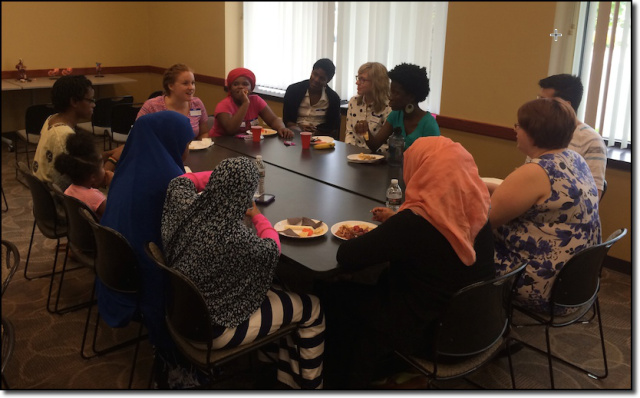
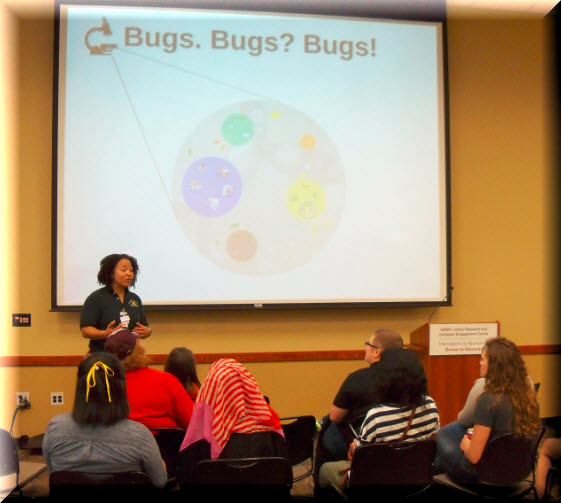
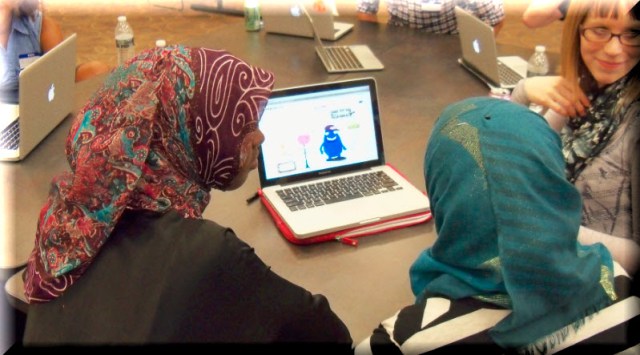
July’s meeting of The Ladder brought together medical scholars of all ages to the UROC in North Minneapolis to learn about infectious disease. In addition to learning about different varieties and causes of infectious disease, we learned about those folks in medicine & healthcare who play roles in helping prevent and treat infectious disease, and conduct research that informs everything we know about infectious diseases.

bugs

Scholars learned about a variety of diseases caused by bacteria, viruses and parasites, as well as how some diseases are spread and prevented.

laptopLearning

Medical scholars participated in an exercise to illustrate how some infectious diseases are spread by physical contact. In this exercise all scholars received test tubes filled with clear liquid, but one scholar’s test tube contained a special, but invisible, substance (a liquid with a pH greater than 7.0 – no actual infectious diseases were involved!!!). Scholars then exchanged small amounts of fluid from their and a few others’ test…

View original post 151 more words

Devoted Husbands and Fathers

I have known such great men over the years. Most were patients I have cared for. So many of them I met because their wives pushed them in to the office. When they finally got there, they often shared why they were so reluctant to come. Many thought I was just this kid and I had to win their respect with my skill. Once accomplished, they came in and confided in me.
They appeared to be healthy hard-working husbands and fathers. I, unfortunately, diagnosed quite a few with untreated hypertension, cancer and diabetes. It can be the hardest thing a man does when he admits he has an illness. I found what I though was just a cyst on a patient’s back. It turned out to be metastatic kidney cancer. He was so strong through the ordeal. Most concerned about his wonderful wife. She was my patient. It was not a long illness and he had no long battle. We did not have many treatment options.
My favorite couple was one of my most tragic cases. Mr. C ‘s wife had multiple medical problems. Through it all he was there. She developed a blood clot in her leg and then we finally diagnosed cancer of the kidney. We transferred her to the University Hospital but she died during surgery. He was devastated. Every visit was not about his medical problems but about the loss of his wife, soul mate after more than thirty years of being together. He was comfortable enough after all this time to reveal how lost he felt. He was overwhelmed by the advances from women who wanted to take his wife’s place. He was surprised because many of them were her friends. I tried to be helpful and not offend him. I told him he was such a good husband that they wanted to have the same loving relationship. He was not ready. I found myself giving him tips on how to handle these lovely church ladies many of whom I knew because they were patients or I knew them through my work in the community. He would just say “She was a beautiful woman and no one can replace her.”
One of my colleagues, Dr. S, entrusted the care of his beloved wife to me. It was a compliment but I felt I had failed the first time I admitted her to the hospital. I soon learned that he had been taking IV bags on vacations just in case she had a problem. She had decided he needed support. She was devoted to him. She would tell me stories of the old days when doctors lived in the hospital housing. She was a nurse and that is how they met. She held the family together while he was always in the operating room. They lived on what she earned because residents had meager salaries at that time. He was the beloved surgeon. She had managed his office and his life. When she died, I remember telling him to take care of himself. He had retired. His daughter-in-law hugged him and said that was her responsibility now and she was honored to do it. He had been there for everyone.  He planned to leave no money for his children and they knew that. He made sure that he and his wife had everything and she enjoyed life. They gave to the community and he would never complain if a patient had no insurance. He left his children more than money, it was a legacy of his hard work and total love and devotion to them and his community.
Mr. A cared for his wife who was disabled and in a wheel chair after having a stroke. He was a devoted caregiver and thankfully he had help from his family, friends and a home health aide. His wife had been a dynamic women and quite fashionable. At each visit, she was dressed in one of her many stylish outfits and always her favorite perfume, jewelry and a hat. When his wife died, I was concerned that he would just give up. I think his friends and family felt the same way. They all came to her funeral and made sure he knew that people loved him. He was showered with requests for him to visit friends and relatives all over the country. Those making the request went one-step further and sent plane tickets. The first few months he traveled. They all managed to keep up their active support for a number of years. He thrived with the attention. His faced glowed with gratitude.
We always think the smoker will get lung cancer.  Sometimes, it is the innocent one who spent all those years saying, “Please stop smoking.” Finding out that the lung mass in the non-smoking wife is cancer can be devastating to the family.  When that cancer is one typically associated with second-hand smoke exposure, it is especially hard. She died from her cancer. He had to go on and struggle through her loss and unfortunately, emphysema. His daughters took care of him because he was a loving father and husband.
Fathers Day is a time to honor those men who love and support their families. I remember admitting a dad who had developed pertussis (whooping-cough). The Pediatrician admitted the infant daughter. He was so upset that he had been the one to make his child sick. We explained this can happen. Back then it was a few cases and now there are more.
Loving husbands and fathers make a difference during difficult times. My husband spent many days taking our son to the Pediatrician alone for shots. It was difficult for me to get away from my training and later the office. He did the soccer games, tennis lessons and all the homework. He was the Book Fair volunteer; he and another Dad would make sure the kids made smart book choices. He was the chaperone on the school trips. He made all the visits to the orthodontist for braces, found the Barber for the haircuts and scheduled the music lessons. He cooked all our meals and even did the laundry.

Happy Father’s Day!!!!

Day 527: Support

I had to post this. As a primary care doctor, i always want my patients to leave knowing they are safe and supported.

Ann Koplow's avatarThe Year(s) of Living Non-Judgmentally

I observed many different types of support yesterday, including:

  • A primary care doctor, helping a distressed and emotionally overwhelmed patient decide whether to accept available support at a psychiatric facility.
  • A room-full of doctors, nurses, social workers, and other health providers, discussing a moving poem about a patient’s hospital experience.
  • A doctor accompanying an elderly man, as they circled by me several times, gathering information about his reactions to walking.
  • That same doctor informing me that my foot pain was tendon-related, and that it would heal in a week, with Aleve, ice, and this other support I remember witnessing in my childhood:

Image

(image found here)

When I left the doctor, I felt supported and hopeful enough to do some walking, and I observed …

Image

team support,

.

Image

… different types of walking support,

.

Image

Image

… things supported in the air,

.

Image

a kind of vehicular support I’ve been noticing…

View original post 63 more words

Caring for Patients: Vaccine Preventable Diseases

My son and several friends developed chicken pox. It was a just before the vaccine was approved for widespread use  and became part of the routine immunization schedule. He developed mesenteric adenitis and for a few hours I held him as he cried in severe pain. A dose of Tylenol finally kicked in. I knew what it was but it was frightening watching him. That year several children died from an invasive streptococcal infection. One of them was a patient. We always feared the complication of Reyes Syndrome but not cellulite or pneumonia due to this invasive bacteria was a surprise.  There were cases from California to New York.

It is not widely known but we are having a resurgence of vaccine preventable diseases in the US. It is happening in many states. There are cases of measles and mumps in California, New Jersey, New York, Ohio and Texas. From January 1 through May 23, 2014 a total of 288 confirmed measles cases have been reported surpassing the highest reported yearly total of measles cases since elimination which was 220 in 2011. We are losing the advantage of herd-immunity because many are choosing not to be vaccinated. The vaccines are not a hundred per cent effective. Many of those immunized do not develop full immunity after vaccination. Thanks to several recently written news articles and television news reports, the alarm is being sounded. We need to be more vigilant. The CDC reports that 280 (97%) of the cases were associated with importation of measles from at least 18 countries.

I found out in medical school I lacked immunity to Mumps. I received a single dose of the vaccine. I remember having both measles and chicken pox along with my sisters and cousins. We were all home from school. Now, I always show immunity when I get blood tests.

My son went to Buenos Aires when he was 11 for a program so he was immunized against Hepatitis A. I remember the Hepatitis A outbreak in my area in the 90’s. I had patients coming in to get blood work. We worked with the local Health Department and they got the Immune globulin. I had my son get the Meningitis vaccine when he was in college even though he was commuting.  I am a believer in immunizations. I am concerned that I should have him tested for immunity to measles, mumps and rubella. There are some patients that do not develop immunity even with adequate vaccination. I may be overly concerned.

I have the responsibility of enforcing the university immunization policy and it is not an easy task. This year I increased the requirements. Many students don’t think it is important. Many doctors also fail to follow the immunization schedules and vaccinate their patients. So I have to take on the role, to insure we have no campus outbreaks. With two cases of chicken pox, I had double work. I had to notify students, get them tested for immunity and those not immune had to be vaccinated. I really do not want a repeat of this.  So, I am hoping my new Electronic Health Record will help me improve compliance.

And the ISP title winner is…

The results of Christina’s hard work.

Christina Jones's avatarStudying Abroad in India: My Experience Abroad

Dalit Women: Exploring the Social Determinants of Health Access in Rural India through Development

As I promised, the abstract to my paper is below:

Abstract

Dalit women in rural India are discriminated against triply because of intersectionality, the fact that they are Dalit, they are poor and they are women. This community is one of the most marginalized groups in India especially within the rural parts of India where the caste system is particularly important. These women are denied of their basic human rights: life, health and education. India does however have a reservation policy in place but being a Dalit woman is still not easy. There are also many health programs in place but with poor implementation and lack of knowledge, many Dalit women cannot access these health resources. On account of their ‘untouchability’, their health indicators are poor compared to individuals of higher caste. Previous research shows that…

View original post 171 more words

Caring for Patients: What still causes me to lose sleep at night

I have spent many nights not sleeping. The biggest reason was worrying about patients and medical decisions. I would call the ICU at night to make sure patients were stable. The nurses would always reassure me. I would worry about a sick patient from the office and hope my treatment plan was the right choice. It has taken years to be less worried but I still am.

I worried that the new drug I prescribed would treat the condition and not cause a serious side effect. Pharmacology was my best course in medical school. The professor was awesome. We did have to read and know every page of the textbook to pass the exam. I quickly learned that a patient can have the side effect from the list of 10% or 1% most common side effects and that can be a nightmare or a nuisance. So when I am prescribing any medication, I think first is it really necessary. I don’t give out antibiotics for colds. If I give the “Antibiotic to Hold “prescription, my patients don’t fill it, they get better with just time. I love it when they bring back a folded piece of blue paper.

I don’t prescribe sleeping agents or narcotic pain medications to my students. In the past, I reluctantly wrote those prescriptions. I always tried non-narcotic pain medications first and referrals to the appropriate specialist. They came back on narcotics. Also, I tried to get patients to exercise, turn off the TV in the bedroom and meditate to treat insomnia. Those suggestions were met with resistance and the need for an instant cure. So, I prescribed then Halcion and Restoril. They really did not work and caused other problems. In older patients, memory loss, loss of balance and depression. In younger patients, they caused dizziness and palpitations.

The narcotic pain medications were also a problem. My worst case was a nurse that stole my prescription pad and wrote her own prescription for pain medication. She was caught by the pharmacist. I had a very noticeable way of writing prescriptions for controlled substances. She did not notice that and it was her undoing. I learned that technique after a patient changed a quantity of 10 to 100. The pharmacist caught that too. I always gave small quantities. A lesson learned as a resident when one of my drug diverting patients used his prescription to overdose after being confronted by a physician for using multiple doctors to get pain medications. I had to admit him to the hospital because I was the resident physician. With the new electronic data bases, more patients are being caught. I recently had a patient with a 17-page report. The resident I was working with learned the same valuable lesson.

Generics are cheaper and are equivalent to Brand medications but the delivery systems for many drugs are patented. So when a patient complains that their pills are changing colors each month, it is due to generic medications. Brand name drugs have patented colors and company logos. Patients can get pills mixed up and take the wrong one because they can be the same color, shape and size. We all metabolize drugs differently due to genetics based on race and sex. So a patient can be doing well on one form of the drug and have problems with a new prescription due to the rate of absorption of the of the medication.  I learned that the hard way. A patient switched from a brand medication that had the patented slow release delivery system to a generic. She complained that she felt dizzy and faint one hour after taking the new form. She was getting a more rapid release of medication and I had to write “Brand Only, no generic substitution” to get it paid for by her insurance company. I had to fill out a form with a detailed description of the problem.

So, why is this important? It is pharmacology. When I read the side effect profile of most drugs I get nervous. So prescribing them has caused some sleepless nights. So, how do I treat my insomnia? Exercise, yoga and meditation work great. I do not have a TV in my bedroom and I try not to look at any electronic device after 9 pm. I go to bed and practice breath awareness. For pain, I used my chiropractor to treat an injured shoulder and augmented it with yoga therapy. I treated my leg injury with exercise, ice and time. I have learned there is no magic pill.

Narcotic pain medications can be abused. I did Hospice Care for years and I know they can relieve pain and suffering for many patients. However, now they are a problem leading to the FDA approving the Naloxone pen to treat drug overdoses. The pen will be carried by first-responders in the community and on college campuses.

So in my new role, I reiterate, I do not prescribe narcotic pain medications, sleeping agents or medications to treat Attention Deficit Disorder (ADD). The ADD medications are being abused on campuses as “Study Drugs.” In medical school, several classmates crashed due to what we called “Uppers” when they were pulling all-nighters. I always needed sleep and good food before any examination so I could never do an all-nighter. Coffee was not even an option. I did not drink it until Residency and now, I can only have my one cup in the morning. It can cause insomnia due to caffeine.

I am thankful to my Pharmacology professor for forcing me learn all those drug classifications years ago. He also taught me respect for the 10 % and 1%.

March Meeting Recap: Dentistry and Dental Health!

Future doctors, nurses, dentists and leaders. This is a wonderful program.

therealtinlizzy's avatarTheLadder

We were super fortunate to have some awesome guest scholars at the March meeting of the Ladder: students from the University of Minnesota School of Dentistry!

Dentistry students overseeing Ladder scholars making dental impressions University of Minnesota dentistry students overseeing Ladder scholars making dental impressions

After making use of our mouths to eat lunch and introduce ourselves to one another, our dentistry guest scholars taught us about the importance of dental health and demonstrated a variety of ways to keep our mouths healthy.

Medical Scholar Halima bravely demonstrates using dye on teeth to observe areas where plaque is concentrated that may need a little extra brushing:

Using dye to observe plaque Using dye to observe plaque

Medical scholars Ashawna and Stephen pose with the coffee/tea/soda-soaked shell-on eggs they’ve been brushing with toothbrushes and toothpaste as a demonstration of how stains on teeth can be decreased or even prevented (to some degree) by being a dedicated teeth-brusher:

Medical scholars brushing stained "teeth" (eggs!) Medical scholars brushing stained “teeth” (eggs!)

View original post 158 more words