Black History Month: Time to Appoint an African-American Female to the US Supreme Court

Black History Month for me was always special.  At our  school we had special programs and even better was all the programs we had at church each year.  There were the plays, poetry readings and guest speakers. The concerts featuring special music show cased the talents of so many including my sister.

Growing up my heroes were Barbara Jordan and Shirley Chisholm. I was in high school and college when they took their places in the Democratic Party and changed it forever.  So I really think it is time to make history and appoint and African-American female to the Supreme Court. The first African-American female Supreme Court appointee will be a special person. I often think she would have to be an incarnation of these two great women. Each woman would so eloquently pass the scrutiny of this Congress. Could you imagine either one of them face to face with the members of Congress.

Barbara Jordon

1976 DNC Keynote Address

Barbara Jordan was a lawyer and an educator who rose through the ranks and to my memory gave one of the best keynote speeches ever heard at any political convention. I was in my first year of college and getting ready to vote in my first election.  We had hoped she would be the  first black female to be appointed to the Carter Administration as US Attorney General but that did not happen.  It was a dream “deferred.”  Nevertheless, she went on to greatness.

Shirley Chisolm

Announcing her bid for the Presidency

Shirley Chisholm was another  trailblazing woman.  She was not a lawyer but an educator.  A great teacher and advocate for equal education and employment opportunities.  She went on to have a historic political career.  She awed us all by having the courage and commitment to run for president in 1972.  I was still just in high school.  She was passionate about her campaign and each speech rallied our support.  We all felt empowered by her eloquence and determination to make a difference.  Another “dream deferred.”

Now, other heroic African-American women have made their way through the ranks by doing excellent work and making a difference. They are waiting for the chance to courageously step forward. It is the time for one of these African-American females to take a seat on the Supreme Court. Leah Ward Sears, former justice on the Georgia Supreme Court, wrote that the ideal Supreme Court Justice should have a strong character, be a visionary and be a patriotic American. There are African-American women who have the courage and the sense of justice that is needed.

This is a significant moment in time and  President Obama has the once in a lifetime opportunity to fulfill those dreams and hopes that Barbara Jordan referred to at the 1976 Democratic National Convention and Shirley Chisholm expressed when she had the courage to run for president.  More importantly, these are the dreams and hopes of all those little girls who were empowered by two courageous women and who now are inspiring the next generation. Many of them are now in the position to step into history and help bring more diversity to the decisions to be handed down in the next few years.

Caring for Patients: It’s medical not political

Thanks to the Affordable Care Act we now have coverage for contraception under all insurance plans. There are some exceptions. The rants of Mike Huckabee and other politicians were very upsetting. I did like Carly Fiorina’s take on the issue “Men should stop talking about women’s issues”. This really should be an issue discussed in the privacy of an examination room with a woman and her health care provider. Taking care of women has taught me some lessons. Women want reliable contraception with few side effects to prevent an unintended pregnancy and have the freedom to enjoy a sexual encounter with their partner. It has nothing to do with controlling our libido. It is about not worrying about a missed period. Another lesson I have learned is that caring men want their partners to have a reliable contraceptive with few side effects. They do not want their partner to have to suffer. They do recognize that they have to take responsibility and use a condom if they have to and feel very upset if they fail. Many of these of these offensive remarks sound like comments I have heard from abusive partners over the years.

The CDC website states that psychological/emotional abuse can “include, but is not limited to, humiliating the victim, controlling what the victim can and cannot do, withholding information from the victim, deliberately doing something to make the victim feel diminished or embarrassed, isolating the victim from friends and family, and denying the victim access to money or other basic resources. It is considered psychological/emotional violence when there has been prior physical or sexual violence or prior threat of physical or sexual violence”. If this sounds familiar, it should make you as upset as I am. If you go back and listen to every statement made by the outspoken politicians of late, you find elements of this definition in their statements.

For me, starting the pill after my son was born made residency much easier. My husband was a pharmaceutical company sales representative. The company launched its low dose oral contraceptive pill and I started taking it in 1987. After a few weeks of morning nausea, I was fine. I learned to stop my period even before it was common place with the new extended cycle pills. I would not have period during my hospital rotation months, during my vacation or on my weekends off. When I finished residency and started my private medical practice, I continued regulating my period. I also managed to save many honeymoons and vacations by using this method for my many female patients. I never had a period because I was too busy seeing patients or being on call. That was my freedom.

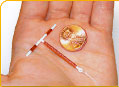
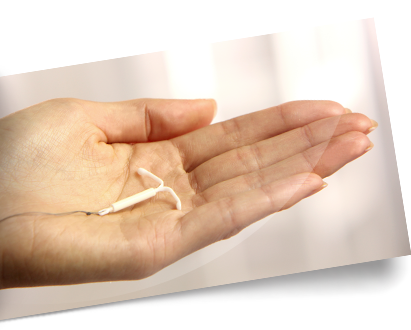
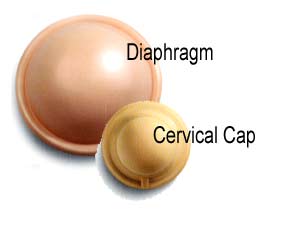
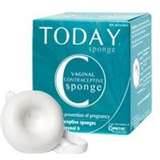
Now there are the new extended cycle pills that are being used by more women. Many women are not using them because of the higher insurance cost. The ACA will change that. The hormone dose in these oral contraceptive pills is even lower; one pill has only 10 micrograms if estrogen compared to 30 micrograms back when I started. Not only are the pills lower in dose, the new IUD’s are called Intrauterine Contraception (IUC’s). There are two types. The copper IUC which is non-hormonal which lasts for up to ten years and hormone containing IUC which is effective for five to seven years. paragardParagard http://www.paragard.com/default.aspx mirena   http://mirena-us.com/ I really love the new FemCap which is an improved version of the diaphragm and cervical cap. It is non-hormonal. cervical capfemcap FemCap   http://www.femcap.com/ Another blast from the past is the new and improved contraceptive sponge. Renamed “Today Sponge.” We all remember the Seinfeld episodes with Elaine hoarding her supply of the Sponge. This is an over-the-counter product and not covered by insurance. spongehttp://todaysponge.com/

Access to reliable and affordable contraception is our right and is medically necessary. The medical facts are being dismissed as we have to listen to the political rhetoric and the hysteria. Contraception decreases the risk of unintended pregnancy for women. Worldwide, women do not have this freedom. Contraception can reduce child-birth related deaths worldwide. In Nigeria, women are waiting in lines to obtain contraception. The facts are that using contraception is a safe option.

We made the decision together to have only one child to add to my husband’s two children. Every woman should have that freedom. It just takes a few clicks to be informed.

Caring for Patients: Women and Poverty

I read the latest Shriver Report A Woman’s Nation Pushes Back from the Brink.  The statistics were not surprising to me. We have made great strides in some areas but only for a small percentage of women.  All my life, I have known personally the plight of women in America.  For me, it started at age 5, when my parents were divorced.  My mother was proud, independent and refused child support if it meant having to share custody with my father.  Women had few rights at that time. From that moment in 1962 she was a single mother with three girls and no outside income.  I was the oldest. So she went to work. We were fortunate to have the support of her family.  We first lived with my grandparents and later moved to our own home in the “Projects” or subsidized housing.  In between, we  shared a house with my uncle.  He worked nights and my mother worked days. My mother worked two jobs at times and so we never qualified for  free rent, food stamps or medical care.  It was not easy for her to accept any handouts.  She once tried to stand in line for free Christmas gifts  on her only day off.  She was successful but would never waste another Thursday that way again   At times she was frustrated  over the need to have her brothers co-sign for any loans she made because she had the better credit and always paid her bills on time.

She is from a long line of strong women in her family that started with my great-great-grandmother. They have shaped the person and physician I would later become.  They are a loving and caring group of women. They have cared for all of us in one way or the other and been paid care-givers at times.  I know they all worked for less money than they deserved. I too have had to face pay inequity.

We did not get health insurance until my mother could pay for it. So we received care from the Community Health Center and the Dental Clinic at the University of Alabama in Birmingham. I did not know how far below the poverty level we were until I applied for financial aid to attend college in 1974 and later medical school in 1978.  My mother made sure we had the best of what we needed and much of what we wanted. However, she taught patience and gratitude. These lessons would later serve me well.  As we look at the plight of women, divorce is one that causes significant loss of income for women and children. If fathers are not supportive, there is no support for college. I did qualify for federal loans and repaid them once I started earning an income.

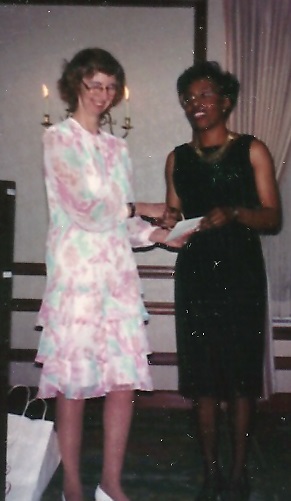
Judy_grad5       Judy_grad_Res

High School Graduation                            Graduation from Residency

When I started my practice in 1990, a large percentage of my patients were women who worked every day but made too much to get Medicaid and food stamps and, whose employers did not provide health coverage.  If they worked and had health insurance, they were providing coverage for the entire family because their spouses worked for employers who did not provide health insurance.  Like my mother, many of them were divorced. Their children received needed vaccines under the Vaccine for Children Program (VFC) and they could qualify for the Breast and Cervical Cancer Early Detection Program (free pap smears and mammograms).  However, sick care was an out-of-pocket expense.  Their children could get sick care from the Health Department Clinic.  The Affordable Care Act will change this for women and children.  However, the real solution as pointed out in the report is to raise the minimum wage and to have equality in pay for women.  Another key point in the Shriver Report is that to improve the plight of women will make significant gains for men and children. Women are the primary wage earners in a large number of families where there are children.

One of my favorite quotes from Dr. Martin Luther King:

“The curse of poverty has no justification in our age. It is socially as cruel and blind as the practice of cannibalism at the dawn of civilization… The time has come for us to civilize ourselves by the total, direct and immediate abolition of poverty”.

I am a physician and it is  difficult for me not to support the ACA.  As a child of a single mother who overcame all the odds and made it possible for me to go to college and medical school, I have to support measures to raise the minimum wage and ensure equity in wages.

As we celebrate the Dr. King Holiday tomorrow, let’s recommit to serve others .

Get a Flu Shot!!! It’s not too late

If I was in charge, the Flu shot would be mandatory for everyone. Influenza is preventable and over the years, I have heard so many excuses that a few years ago, I just started saying to patients” That is not true. There is no evidence for that.” Not to be disrespectful but to start a more informed dialog about the benefits of getting a vaccine for a vaccine preventable illness.
FluWidgetMed_English
So, it is not perfect each year. So some people get the Flu even if they had the shot. The cases are low and that is not a valid reason to skip the shot. This year the shot does contain the most prevalent strains of the virus. The Flu shot must be administered each year because of changes in the virus. Each year the CDC and the World Health Organization (WHO) closely monitor the strains of virus present to decide which ones should be included in the flu vaccine. This vaccine can’t give you the flu. However, flu vaccine, like other vaccines, can occasionally cause a reaction. Feeling some response to the shot is not unusual. The best time to get vaccinated is October or November. Children getting a flu shot for the first time will need two doses given 30 days apart. The flu shot is not approved for use in children less than 6 months old.

In residency, I got the flu shot to prevent the risk of my toddler and patients getting Influenza from me. I was caring for a lot of sick patients between my AIDS patients, the nursing home and the Newborn Nursery. When I entered private practice, I started to make sure my patients received a Flu shot. It was not until 1993 that Medicare actually covered the cost of the vaccine. Recommendations have changed over the years and now the basic recommendation is that everyone should get a Flu shot.

I only had Influenza once which I believe was 1992 or 1993 in March of all the worse times to get it. It was one of those years when we had a late start to Flu season. I was so sick that I had to cancel patients. I took one of the older antiviral medications on the market at the time but stopped it because of the side effects. After that experience, I get a shot in September and again in January. I was the boss and I was paying for it so I had that option. I have not had it since. Of course, now I just get one well-timed shot. When I was director of a Prenatal Clinic, we encouraged our pregnant patients, their children and spouses to get the vaccine. It really worked. I don’t recall having a case of Influenza in a pregnant patient while I was there. I am thrilled that hospitals and school systems are mandating it. But it is not in all states yet.

One year working as a medical director of a Nursing Home, we had a nation-wide vaccine shortage. The supply was late getting to our patients and we had an outbreak. I became aware of the risk of death that comes with contracting Influenza in a debilitated elderly population. The mortality rate is high. We lost a number of patients to pneumonia that year. We actually had a resident based in the facility to monitor the patients. The hospital was overwhelmed so we provided care in the facility. I think the outcome was better but we all felt the toll along with the families.

I now work with college students. We can’t make it mandatory but I can say that getting the vaccine prevents lost days from classes, missed examinations and can affect the final grade. The Flu can ruin a presentation or a project and without intervention can lead to a drop in a grade. Also, there is the risk of hospitalization for pneumonia and even death in this age group. For the first time gave out all of our vaccine and will reorder if the demand is there. It is my hope that parents encouraged their kids to get vaccinated during Winter Break.

My advice is get a Flu Shot if you haven’t gotten one already and insist that those in your extended circle get one.

Celebrating 30 years: Looking back on 2013 and ahead to 2014

Looking back 2013 was a year of celebrating 30 years.  The year started with spending time with my family in Birmingham the first week of January.  I caught up with two of my college friends and founding members of our chapter of Delta Sigma Theta on our Campus at the University of Montevallo.  Of course, I spent time with my family. I love driving to each aunt’s home and sitting and talking.

In March, I hosted the family Easter dinner at my home.  For years we traveled to Baltimore for dinner and church service. When we lived on the Eastern Shore, we had several dinners at the home of my friend Ann. This year we are hosting again.  The Baltimore family is traveling to NJ again.

In May, I attended the annual Society of Teachers of Family Medicine Meeting in Baltimore MD.  I had the honor of introducing the keynote speaker and moderating the Q&A session.  This year, I am doing the same but the meeting is in San Antonio.  May was my 30th Medical School Class Reunion.  I did not attend but it is hard to believe that I graduated from medical school in 1983. I feel like it was yesterday. Since graduation, I have spent 30 years as an MD.  I have practiced in New Jersey, Maryland and Tennessee.

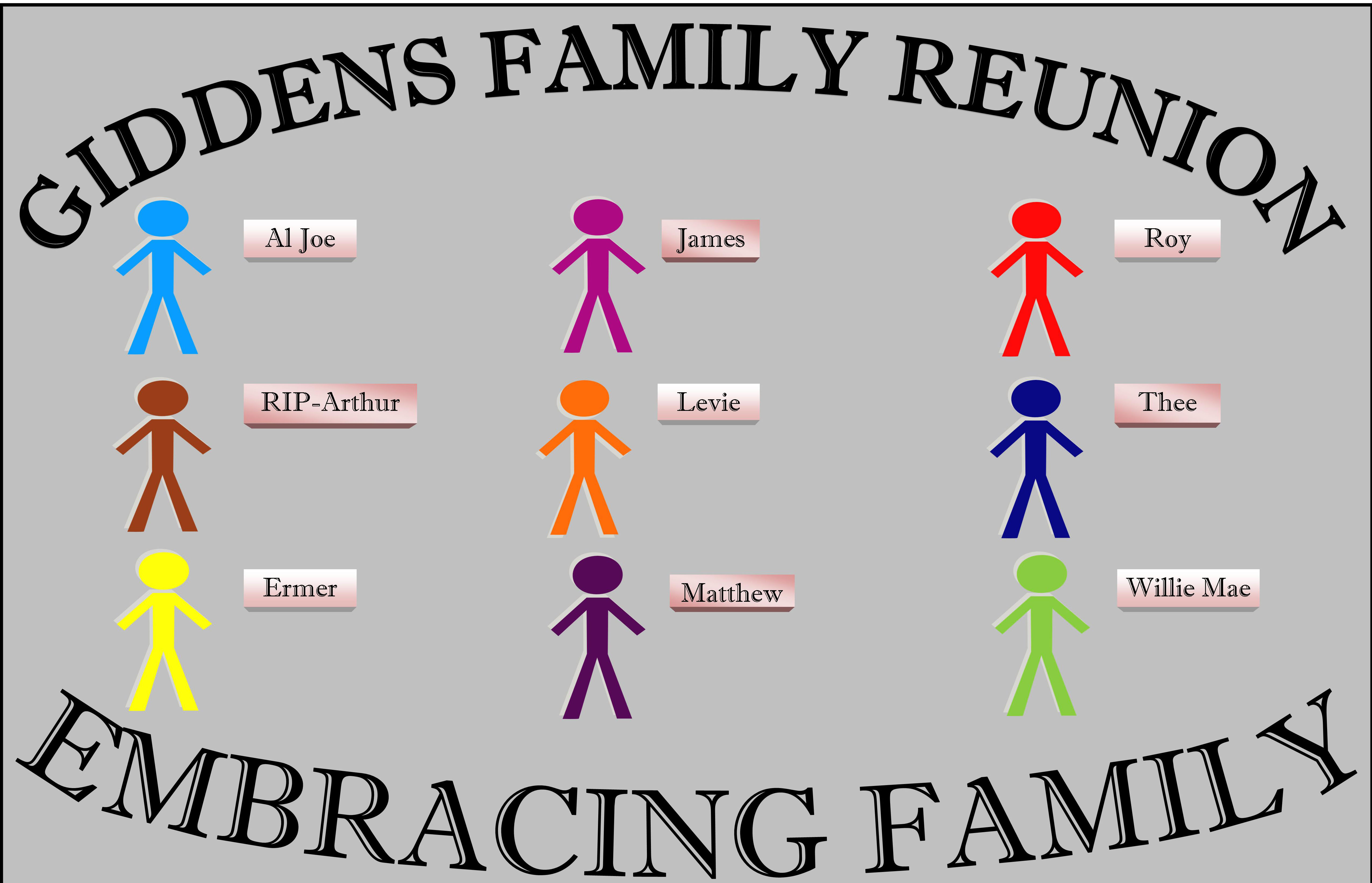
June was a spectacular month. I started my blog and posted a short story I wrote. We traveled back to Birmingham for the first Annual Giddens Family Reunion. It was attended by over 200 members of my grandmother’s family.   Family_Reunion_Poster_new This year we will have another reunion in Birmingham and then start every two years.  We have a Facebook page.  It is used to announce birthdays and unfortunately update us on illness and loss.  My grandmother was from a large family.  We lost her brother (last surviving sibling) this year.  They were a remarkable group of people and we all hope to live up to the high standards they set for us.  The first is to keep getting together to celebrate our family.

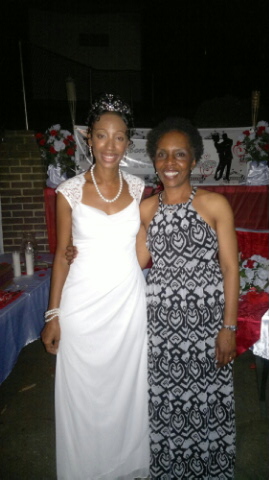
In October, my stepdaughter was married in DC at the home of her new husband.  It was 30 years ago that I met my husband (her dad) and she and her brother became a part of my life.V__F250 We spent a lovely few days in DC during the government shutdown.  All the monuments and museums were closed so we walked around and took pictures. WP_20131005_016[1]

In December, we spent a few days in Ocean City Maryland.  It was 30 years of celebrating birthdays as a family. The weather was beautiful. WP_20131201_001[1]

I saw the Christmas Spectacular at Radio City Music Hall and waded through the crowds to see the Christmas tree at Rockefeller Center. We made it to Baltimore for Christmas Dinner and the drive down was delightful.  This year there was no snow or blinding-rain.

We have celebrated 30 New Year’s Eves together.  We spent a quiet evening at home and watched “Casablanca” and “Foyle’s War.”  We received greetings from friends and family on Facebook and by text message.

Here’s to 2014.  I am going to work very hard the first few months because of projects I need to complete but I do plan to spend time catching up with old friends. I do not make resolutions but if I chose a theme or a word, it would be “Gratitude.”

Happy New Year

Gumbo

I am going to make Gumbo New Year’s Eve. Instead of a Lenox Crystal Ball, in New Orleans they drop the Gumbo Pot.  The first time I made it was while we were living on the Eastern Shore.  I had what I thought was a great recipe in a cookbook titled “One of a Kind: Recipes from the Junior League of Mobile.”  It was a wedding gift.  I was making the Gumbo for our Mardi Gras Party at a colleague’s house. A group of us decided to bring Mardi Gras to us. Being the only true southerner, I volunteered to make the Gumbo.

I took my cookbook to my husband’s aunt, Tommie.  She was a New Orleans native and true Cajun ( her father was from Paris and her mother, African-American). She was known for her Gumbo recipe which she guarded like a state secret.  She took the book and crossed out (with great emotion) some of listed the ingredients and added no new ones.  I did not know that really good gumbo is simple.  She did not use crab meat, chicken or the gumbo file. It’s just good Andouille sausage and lots of shrimp.  The secret is the roux and the cooking time.  The best okra is frozen and do not cook it long.  Add the shrimp and do not over cook.  It only takes a few minutes if the gumbo is hot.

We always purchased  the shrimp in Baltimore at Lexington Market for years.  That meant, we always had an ice chest in the trunk and we have transported shrimp as far as Chattanooga, Tennessee.  I always tried to get the sausage there too.  One year, we almost did not find the sausage.   Well the Gumbo was the hit of that party and many more.  Over the years I have made it so many times and it never fails to impress. I have had to toss out a couple of bad batches of roux.

What is unfortunate is that our beloved aunt has Alzheimer’s.  I always made sure we talked for hours when we visited her in Baltimore. So I know a great deal of family secrets.  She lived two row houses down from my mother-in law.  The two of them were more like sisters than sisters-in-law. My mother-in-law passed first.  Tommie was heart-broken. We cleared the  house together. When she started showing signs of memory loss and became more difficult to manage: Roy and I would visit, take her to lunch at her favorite place, the “Cheese Cake Factory, and then to church.  We also would take her to the mall and to visit friends and relatives.  Roy had a calming effect on her.  He would drive and talk to her.  She had taken care of him when his mother was working. He always made her laugh.

I made the Gumbo a few years before we lost Tommie’s husband. It was the year Christmas Eve was on a Friday. When I told them I was making it, they all reminisced about Tommie’s Gumbo and told such sweet stories. Well, when I told them I was using her recipe they were in disbelief. They asked how I had been so lucky and I told them. That was a special pot of Gumbo and I was so proud to make it. It was downed with love. We had leftovers for Christmas dinner. They all said it was indeed her recipe. It was also the year after we lost our great hostess, Sylvia. She was the wife of Tommie’s son Jack. Jack is like my husband’s baby brother. Sylvia was the one who put together all the holiday dinners. So that pot of Gumbo was in honor of two great ladies.

I can’t help but speak of Tommie in the past tense.  That is what Alzheimer’s does.  It robs you of the person and leaves just the body. The woman I knew is not here but I did take her to lunch right before she had a turn for the worse. We had a great time..  We may have even gone to church.

New Year’s is a time of reflection. I always talk to friends and family.  I call my mother at midnight in Birmingham which is 1 am EST.  I will make collard greens and black-eyed peas and maybe even cornbread and remember my grandmother and other friends and relatives no longer here.  My New Year’s commitment is to catchup with old friends and colleagues.

Happy New Year!

Caring for Patients: The Holiday Season

WP_20131221_022

I love the holiday season.  Being a physician has changed some aspects of holidays and the way I celebrate them.  All holidays were defined as being “on-call” or “off-call” and it was that way always.  My first year in residency, I was on-call for Christmas.  I had a wonderful potluck dinner with the hospital staff who were working in the ICU.  All through my training, I was mostly on-call and not able to make it home to Birmingham. When my son was born, it did not change.  We were adopted by my friend Elaine (my senior resident) and we spent many holidays with her family in Montclair.  Her father was my hero.  He was the first African American physician to be allowed to join the Medical Staff at Mountainside Hospital.

When we moved to the Eastern Shore, for the first few years, I was on-call.  We were showered with gifts from patients and their families. At first, I was overwhelmed by the kindness.  I was always just being a physician and caring for each patient in the manner I was trained.  That is what Meharry Medical college taught me.  I had to learn to be a good receiver.  I was always taught it is better to give. So I always found it easier to give.

I usually performed my Christmas hospital rounds early in the morning while our kids were sleeping.  My husband made waffles and sausage and they opened gifts after breakfast.  I would hold my breath hoping not to get a call from the hospital, ER or a patient until after I saw their faces light up. The holiday season was a mixture of happiness and sadness.  I had several patients who each died around the holiday season.  One of my patients with AIDS who was suffering from a serious infection died.  I had mixed emotions. I was sad for his family but relieved that he was free from the suffering.  Another patient had a massive heart attack on Christmas day and died in the front yard of his home.  His family was devastated.  I had to be in the ER after the resuscitation.  One year, we had an influenza outbreak that almost closed the school system.  It stopped when the school let out for the holiday break.  The hospital had special treats and dinner for patients who were hospitalized. They each had small decorated trees in their rooms.  One year I was treated to the beautiful voice of a patient singing Christmas carols.  She had an infected bone in her foot (osteomyelitis) and needed IV antibiotics.  She had no family so we could not set-up home therapy for her. I loved rounding at the Nursing Home.  The decorations in the lobby and the patient areas were beautiful. The patients families would be visiting and always thanked us for the care we gave their loved ones.

One year, we received three turkeys, a ham, a large tin of assorted fresh fruit and Omaha Steaks.  That did not include the boxes of cookies.  We had to donate it to the Salvation Army and the AIDS Hospice.  Everyone benefitted from the love that my patients and colleagues showered on us.  I loved to make pies.  So I would make them and deliver them to my colleagues. One colleague was asleep so I left the pie on the top of her car.  She was thrilled.  It was one of my sweet potato pies.

Living in a small town, afforded me the opportunity to be invited to so many holiday events. Each year, I had to purchase several outfits for the party season. The selection was always from Nordstrom’s Half Yearly Sale. I would go to the sale with my shopping buddy Ann. The season began with the Hospital holiday party for the medical staff. The next was our office party.  I loved the Secret Santa gifts.  I had to find the best gifts for each person.   One year, I was awarded the “Doctor of the Year.”  There was the holiday party at the Country Club.  That invitation was courtesy of my office manager and her husband who owned a local bar. One patient was an organist and music director at the Episcopal Church.  We had the pleasure of being invited to the annual performance of “The Messiah.”  The husband of my nurse was a noted tenor and he was the highlight of the performance. My colleague Ann was a cardiologist and an accomplished musician.  She performed in the Bell Choir at her church.  I loved their annual Christmas Concert.  Afterwards, we had a wonderful dinner at her home.  She was an exceptional hostess.  We had many dinners in her home which included Easter dinner for several years.

When I left after six years, I received so many Christmas card.  I started a tradition with so many former patients. Over the years many of them died.  The return card would be from a family member.  The first year, the husband of a patient I had treated a chronic infection died and he sent me a long letter and her Funeral program.  He said, “She loved receiving me card each year. I regret having to inform you of her death.”   We continued to send each other cards until his daughter sent me a card informing me of his death. To paraphrase, “My father was heart-broken over the death of my mother. He has now joined her.”  One year, the wife of my former patient sent me his funeral program and copy of his picture.  He always brought me fresh kale from his garden.  He was known as an excellent cook and baker.  He always brought us baked goods.

Now, I  work for the state of NJ and in our ethics policy; we are unable to receive any holiday gifts except small ones from colleagues.  If a patient gave me a gift, I would have to take it their office and it would be donated to the appropriate charity.  The past two years, I have not been on call.  This year, we spent a few days in NYC.  I saw the Radio City Music Hall Christmas Spectacular with the Rockettes, looked at all the holiday decorations and pushed through the crowd to see the tree at Rockefeller Center.

Merry Christmas to all

Sisterhood of the World Bloggers Award

I started blogging at the encouragement of my friend Lisa Winkler who is a writer, teacher and cycling enthusiast.  Lisa paid me the compliment of awarding me the “Sisterhood of the World Bloggers Award.”

Award

I enjoy reading her blog Cyclingrandma http://cyclingrandma.wordpress.com/

With the award there is a caveat, that the nominee may or may not choose to follow. The first is that you pass on the award to other bloggers.  The second is to answer a total of 10 questions.  So let me comply with answering the questions first.

1. What is your favorite color?  If you looked in my closet, you would think my favorite color is black or gray.  However, I really love the color magenta.  I wear it a lot over black. I also like orange.
2. What is your favorite animal?     I am fascinated by elephants, though you would not cuddle up with one. I am always amazed how something so big can be such loving. I would own a collie if I had the time.  I always loved Lassie.
3. What is your favorite non-alcoholic drink?   I love the taste of coffee.  I drink it without sugar just a little cream.  I stopped drinking sugar years ago so water and a twist of lemon is my mainstay.
4. Facebook, Twitter or both?  I do both.  However, I found out I am too wordy for twitter.  There is an art to a meaningful tweet. I honed my skills on a medical advice site called HealthTap.
5. What is your favorite pattern? I love floral patterns.  They look best on me now, especially with my natural hair.  However, I love geometric patterns for pillows and dresses.
6. Do you prefer getting or giving presents? Well, I prefer both.  I just read on Oprah.com that to be truly happy, you have to learn to give. So, I will be working on increasing my happiness by giving. It really looked at the small things we can do.
7. What is your favorite number? So, it is the number 1 because I always tried to be first because I am the oldest.  After going through Medical School, 10 was OK, meaning second 10% of class.
8.What is your favorite day of the week? I love Sunday morning.  It has always been a day to relax.  When I was younger, it was church.  Now it is a cup of coffee, breakfast and the New York Times.
9. What is your favorite flower? I have an allergy to flowers but if I didn’t, I would fill the house with roses.  I had a rose garden when I lived on the Eastern Shore.  My husband managed to save it after it was neglected by the previous owner.  I always had them in the house despite my allergy. It was beautiful.
10. What is your passion? I really enjoy caring for patients.  Every time I think about what else I could do, it all comes back to medicine.  I am a Family Physician and I love it. Yoga is my next passion.  I would be a yoga instructor.  I think it has much in common with medicine and caring for people.

Here are my answers to your questions Lisa. I promise to get back with my nominees for this award.

Patient Care: Snow Storms

WP_20131215_002

For years, I have never let bad weather keep me from getting to the hospital and making my rounds.  When I was a resident, I was always able to get in.  I never had a snow day.  When I took a year off to practice in a small clinic in Baltimore, the staff had planned to close on a snowy day.  I made it in.  I found out that the Pharmacist lost the bet.  The “Southern Bell” had made it in.

I was always in the hospital either because I could walk or if it was bad enough I was driven in by my husband. He was dubbed “Nanook of the North and me as his “Snow Queen” by a friend and hospital administrator.  I would get the calls from my stranded colleagues and I would spring into action, going through the hospital seeing patients, writing orders and running to the ER to do the admissions.  I would spend the whole day seeing patients.  I even got special treat of free food.

One year on the eastern shore, we had to make it through the Ice storm that paralyzed the whole east coast.  I made it from the office to the hospital slowly driving behind my trusty Physician Assistant who was stuck in the office with me because we had so many patients that day.  When I got to the hospital, the ER was packed with patients who had slipped on the icy sidewalks and needed their fractures managed.  I sprang into action and  I did pre-op evaluations while the orthopedic surgeons set the fractures.  My husband and son were home.  I finally made it to my house hours later.  The next day, the hospital had volunteer drivers who could pick me up.  It was the wife of one the Cardiologist who had a four wheel drive vehicle who made it to my house.

The grocery store scene the day before a snow storm has always baffled me.  I never knew why people purchased so much bread and milk. I would go in to pick up a few things but was always afraid to get too much.   The worst year, we lost power and heat.  Living in a 100 year-old house near the Choptank River was cold.  Our friend brought us Chinese food from the local restaurant that still had power.  I was thankful that my son was not a picky eater. I had so many patients in the hospital and the beeper was non-stop with calls.  Remember in the early 90’s, cell phones were not in wide spread use.  The one I used was the old bag phone.  My car was snowed in.  My husband tried to did it out but the ice was so thick. Even when we moved to Chattanooga, I seemed to be the only one in my group who could make after the rare snow fall.

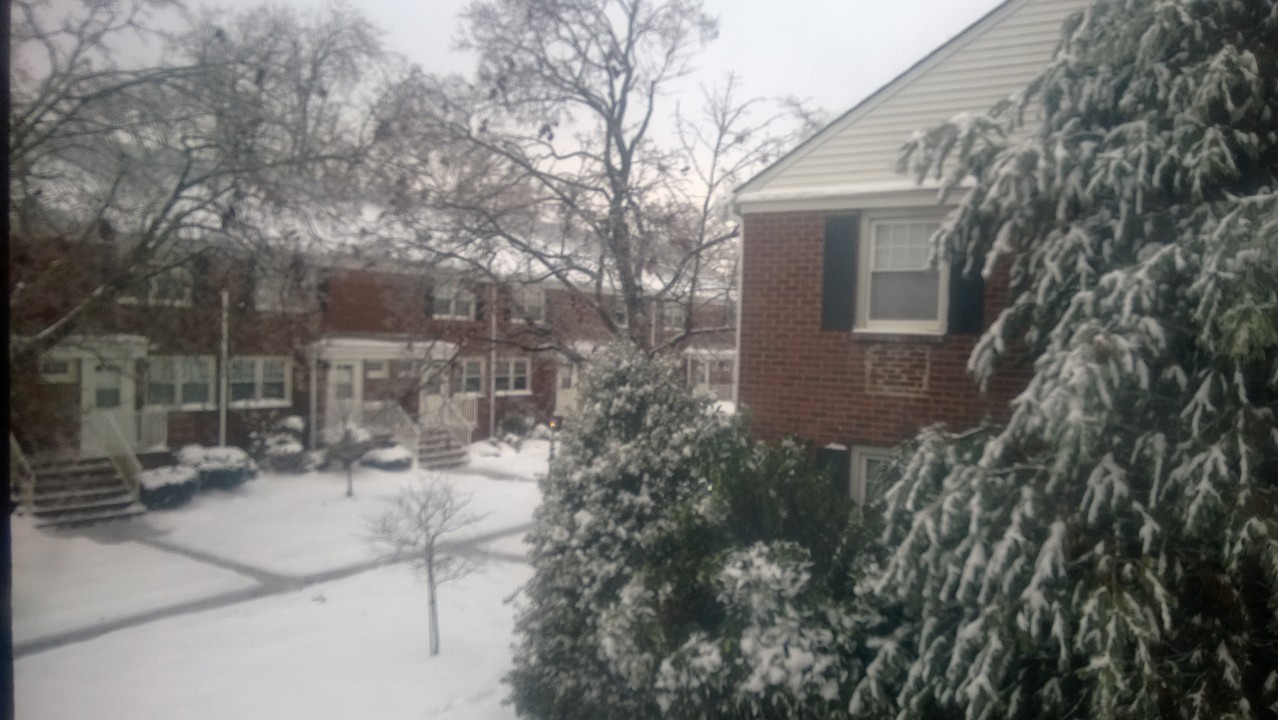
Today as I look out on the winter wonderland, I have nowhere to go.  I shopped yesterday, we have power and I have no call or patients in the hospital.  I am not worrying about how I can get into the hospital to check on patients in the ICU, telemetry, medical floors. The phone is not ring with calls from the Nursing Home.   There are no calls from stranded colleagues giving me the names of their patients that need to be evaluated.  I have no ER calls about patients needing to go to the Operating room because of fractures. So I am writing, reading and just enjoying the warmth for the first time in years.  I am going to watch episodes of “Foyle’s War” which is set in a small town outside London during World War II.  I am also going to read some medical journals, address holiday cards and make dinner.

December 1

December 1 was my husband’s 70th birthday.  It marked 30 birthdays that we have celebrated together.  That is hard to believe.  December 1 is his birthday but it is also World Aids Day. The first World Aids Day was Dec 1, 1988 which was 25 years ago.  I witnessed the first documented case in our hospital in 1983 when I was a resident.  Five years later during my Family Medicine Residency, we would diagnose many cases in men, women and children.  My residency and pediatrics rotation provided an opportunity to unfortunately hospitalize several children who had AIDS.  I provided care to many patients with AIDS and watched too many of them die over a period of 12 years.

It is hard to believe that with all the new information that there are a rising number of new HIV infections in young African- American and Hispanic males.  The irony is that we relaxed the push to get information out there to these at risk groups.  According to the Centers for Disease Control (CDC), African-Americans represent approximately 12% of the U.S. population, but accounted for an estimated 44% of new HIV infections in 2010. Also, Hispanics/Latinos represented 16% of the population but accounted for 21% of new HIV infections in 2010.  Of those living with HIV in 2009, Hispanics/Latinos accounted for 19% and Blacks accounted for 44%. Sadly in 2010, the greatest number of new HIV infections (4,800) among MSM (men who have sex with men) occurred in young black/African-American MSM aged 13–24. Young black MSM accounted for 45% of new HIV infections among black MSM and 55% of new HIV infections among young MSM overall.  These are alarming statistics http://www.cdc.gov/hiv/basics/statistics.html

statistics_basics_HIV-Infections-2010_520x436

I am no longer providing direct care to patients who have AIDS but I do know that I will be diagnosing and referring new patients for treatment.  I am recommitted by these statistics to get the news out to a new generation.  Safe sex through use of condoms is essential to prevention.   However, the sad truth is that 1 in 6 people with HIV do not know they have been infected.  Getting tested is important.  Let’s get the information out there. For more information http://www.itsyoursexlife.com/gyt/hiv-aids/