Caring for Patients: It’s medical not political

Thanks to the Affordable Care Act we now have coverage for contraception under all insurance plans. There are some exceptions. The rants of Mike Huckabee and other politicians were very upsetting. I did like Carly Fiorina’s take on the issue “Men should stop talking about women’s issues”. This really should be an issue discussed in the privacy of an examination room with a woman and her health care provider. Taking care of women has taught me some lessons. Women want reliable contraception with few side effects to prevent an unintended pregnancy and have the freedom to enjoy a sexual encounter with their partner. It has nothing to do with controlling our libido. It is about not worrying about a missed period. Another lesson I have learned is that caring men want their partners to have a reliable contraceptive with few side effects. They do not want their partner to have to suffer. They do recognize that they have to take responsibility and use a condom if they have to and feel very upset if they fail. Many of these of these offensive remarks sound like comments I have heard from abusive partners over the years.

The CDC website states that psychological/emotional abuse can “include, but is not limited to, humiliating the victim, controlling what the victim can and cannot do, withholding information from the victim, deliberately doing something to make the victim feel diminished or embarrassed, isolating the victim from friends and family, and denying the victim access to money or other basic resources. It is considered psychological/emotional violence when there has been prior physical or sexual violence or prior threat of physical or sexual violence”. If this sounds familiar, it should make you as upset as I am. If you go back and listen to every statement made by the outspoken politicians of late, you find elements of this definition in their statements.

For me, starting the pill after my son was born made residency much easier. My husband was a pharmaceutical company sales representative. The company launched its low dose oral contraceptive pill and I started taking it in 1987. After a few weeks of morning nausea, I was fine. I learned to stop my period even before it was common place with the new extended cycle pills. I would not have period during my hospital rotation months, during my vacation or on my weekends off. When I finished residency and started my private medical practice, I continued regulating my period. I also managed to save many honeymoons and vacations by using this method for my many female patients. I never had a period because I was too busy seeing patients or being on call. That was my freedom.

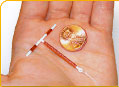
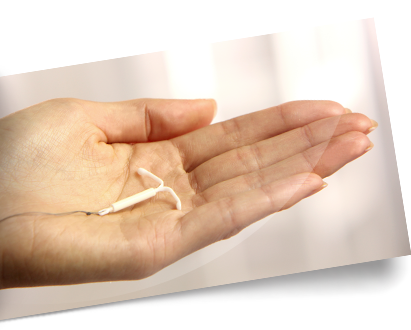
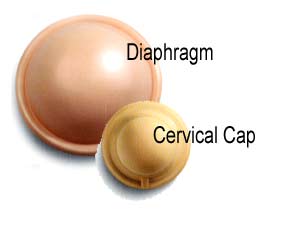
Now there are the new extended cycle pills that are being used by more women. Many women are not using them because of the higher insurance cost. The ACA will change that. The hormone dose in these oral contraceptive pills is even lower; one pill has only 10 micrograms if estrogen compared to 30 micrograms back when I started. Not only are the pills lower in dose, the new IUD’s are called Intrauterine Contraception (IUC’s). There are two types. The copper IUC which is non-hormonal which lasts for up to ten years and hormone containing IUC which is effective for five to seven years. paragardParagard http://www.paragard.com/default.aspx mirena   http://mirena-us.com/ I really love the new FemCap which is an improved version of the diaphragm and cervical cap. It is non-hormonal. cervical capfemcap FemCap   http://www.femcap.com/ Another blast from the past is the new and improved contraceptive sponge. Renamed “Today Sponge.” We all remember the Seinfeld episodes with Elaine hoarding her supply of the Sponge. This is an over-the-counter product and not covered by insurance. spongehttp://todaysponge.com/

Access to reliable and affordable contraception is our right and is medically necessary. The medical facts are being dismissed as we have to listen to the political rhetoric and the hysteria. Contraception decreases the risk of unintended pregnancy for women. Worldwide, women do not have this freedom. Contraception can reduce child-birth related deaths worldwide. In Nigeria, women are waiting in lines to obtain contraception. The facts are that using contraception is a safe option.

We made the decision together to have only one child to add to my husband’s two children. Every woman should have that freedom. It just takes a few clicks to be informed.

Caring for Patients: Women and Poverty

I read the latest Shriver Report A Woman’s Nation Pushes Back from the Brink.  The statistics were not surprising to me. We have made great strides in some areas but only for a small percentage of women.  All my life, I have known personally the plight of women in America.  For me, it started at age 5, when my parents were divorced.  My mother was proud, independent and refused child support if it meant having to share custody with my father.  Women had few rights at that time. From that moment in 1962 she was a single mother with three girls and no outside income.  I was the oldest. So she went to work. We were fortunate to have the support of her family.  We first lived with my grandparents and later moved to our own home in the “Projects” or subsidized housing.  In between, we  shared a house with my uncle.  He worked nights and my mother worked days. My mother worked two jobs at times and so we never qualified for  free rent, food stamps or medical care.  It was not easy for her to accept any handouts.  She once tried to stand in line for free Christmas gifts  on her only day off.  She was successful but would never waste another Thursday that way again   At times she was frustrated  over the need to have her brothers co-sign for any loans she made because she had the better credit and always paid her bills on time.

She is from a long line of strong women in her family that started with my great-great-grandmother. They have shaped the person and physician I would later become.  They are a loving and caring group of women. They have cared for all of us in one way or the other and been paid care-givers at times.  I know they all worked for less money than they deserved. I too have had to face pay inequity.

We did not get health insurance until my mother could pay for it. So we received care from the Community Health Center and the Dental Clinic at the University of Alabama in Birmingham. I did not know how far below the poverty level we were until I applied for financial aid to attend college in 1974 and later medical school in 1978.  My mother made sure we had the best of what we needed and much of what we wanted. However, she taught patience and gratitude. These lessons would later serve me well.  As we look at the plight of women, divorce is one that causes significant loss of income for women and children. If fathers are not supportive, there is no support for college. I did qualify for federal loans and repaid them once I started earning an income.

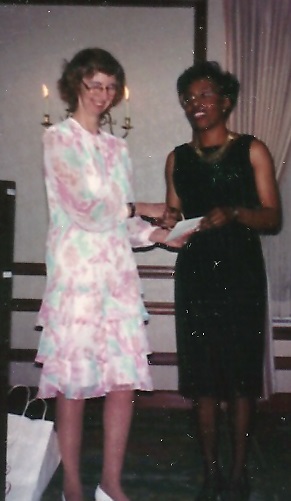
Judy_grad5       Judy_grad_Res

High School Graduation                            Graduation from Residency

When I started my practice in 1990, a large percentage of my patients were women who worked every day but made too much to get Medicaid and food stamps and, whose employers did not provide health coverage.  If they worked and had health insurance, they were providing coverage for the entire family because their spouses worked for employers who did not provide health insurance.  Like my mother, many of them were divorced. Their children received needed vaccines under the Vaccine for Children Program (VFC) and they could qualify for the Breast and Cervical Cancer Early Detection Program (free pap smears and mammograms).  However, sick care was an out-of-pocket expense.  Their children could get sick care from the Health Department Clinic.  The Affordable Care Act will change this for women and children.  However, the real solution as pointed out in the report is to raise the minimum wage and to have equality in pay for women.  Another key point in the Shriver Report is that to improve the plight of women will make significant gains for men and children. Women are the primary wage earners in a large number of families where there are children.

One of my favorite quotes from Dr. Martin Luther King:

“The curse of poverty has no justification in our age. It is socially as cruel and blind as the practice of cannibalism at the dawn of civilization… The time has come for us to civilize ourselves by the total, direct and immediate abolition of poverty”.

I am a physician and it is  difficult for me not to support the ACA.  As a child of a single mother who overcame all the odds and made it possible for me to go to college and medical school, I have to support measures to raise the minimum wage and ensure equity in wages.

As we celebrate the Dr. King Holiday tomorrow, let’s recommit to serve others .

Get a Flu Shot!!! It’s not too late

If I was in charge, the Flu shot would be mandatory for everyone. Influenza is preventable and over the years, I have heard so many excuses that a few years ago, I just started saying to patients” That is not true. There is no evidence for that.” Not to be disrespectful but to start a more informed dialog about the benefits of getting a vaccine for a vaccine preventable illness.
FluWidgetMed_English
So, it is not perfect each year. So some people get the Flu even if they had the shot. The cases are low and that is not a valid reason to skip the shot. This year the shot does contain the most prevalent strains of the virus. The Flu shot must be administered each year because of changes in the virus. Each year the CDC and the World Health Organization (WHO) closely monitor the strains of virus present to decide which ones should be included in the flu vaccine. This vaccine can’t give you the flu. However, flu vaccine, like other vaccines, can occasionally cause a reaction. Feeling some response to the shot is not unusual. The best time to get vaccinated is October or November. Children getting a flu shot for the first time will need two doses given 30 days apart. The flu shot is not approved for use in children less than 6 months old.

In residency, I got the flu shot to prevent the risk of my toddler and patients getting Influenza from me. I was caring for a lot of sick patients between my AIDS patients, the nursing home and the Newborn Nursery. When I entered private practice, I started to make sure my patients received a Flu shot. It was not until 1993 that Medicare actually covered the cost of the vaccine. Recommendations have changed over the years and now the basic recommendation is that everyone should get a Flu shot.

I only had Influenza once which I believe was 1992 or 1993 in March of all the worse times to get it. It was one of those years when we had a late start to Flu season. I was so sick that I had to cancel patients. I took one of the older antiviral medications on the market at the time but stopped it because of the side effects. After that experience, I get a shot in September and again in January. I was the boss and I was paying for it so I had that option. I have not had it since. Of course, now I just get one well-timed shot. When I was director of a Prenatal Clinic, we encouraged our pregnant patients, their children and spouses to get the vaccine. It really worked. I don’t recall having a case of Influenza in a pregnant patient while I was there. I am thrilled that hospitals and school systems are mandating it. But it is not in all states yet.

One year working as a medical director of a Nursing Home, we had a nation-wide vaccine shortage. The supply was late getting to our patients and we had an outbreak. I became aware of the risk of death that comes with contracting Influenza in a debilitated elderly population. The mortality rate is high. We lost a number of patients to pneumonia that year. We actually had a resident based in the facility to monitor the patients. The hospital was overwhelmed so we provided care in the facility. I think the outcome was better but we all felt the toll along with the families.

I now work with college students. We can’t make it mandatory but I can say that getting the vaccine prevents lost days from classes, missed examinations and can affect the final grade. The Flu can ruin a presentation or a project and without intervention can lead to a drop in a grade. Also, there is the risk of hospitalization for pneumonia and even death in this age group. For the first time gave out all of our vaccine and will reorder if the demand is there. It is my hope that parents encouraged their kids to get vaccinated during Winter Break.

My advice is get a Flu Shot if you haven’t gotten one already and insist that those in your extended circle get one.

Celebrating 30 years: Looking back on 2013 and ahead to 2014

Looking back 2013 was a year of celebrating 30 years.  The year started with spending time with my family in Birmingham the first week of January.  I caught up with two of my college friends and founding members of our chapter of Delta Sigma Theta on our Campus at the University of Montevallo.  Of course, I spent time with my family. I love driving to each aunt’s home and sitting and talking.

In March, I hosted the family Easter dinner at my home.  For years we traveled to Baltimore for dinner and church service. When we lived on the Eastern Shore, we had several dinners at the home of my friend Ann. This year we are hosting again.  The Baltimore family is traveling to NJ again.

In May, I attended the annual Society of Teachers of Family Medicine Meeting in Baltimore MD.  I had the honor of introducing the keynote speaker and moderating the Q&A session.  This year, I am doing the same but the meeting is in San Antonio.  May was my 30th Medical School Class Reunion.  I did not attend but it is hard to believe that I graduated from medical school in 1983. I feel like it was yesterday. Since graduation, I have spent 30 years as an MD.  I have practiced in New Jersey, Maryland and Tennessee.

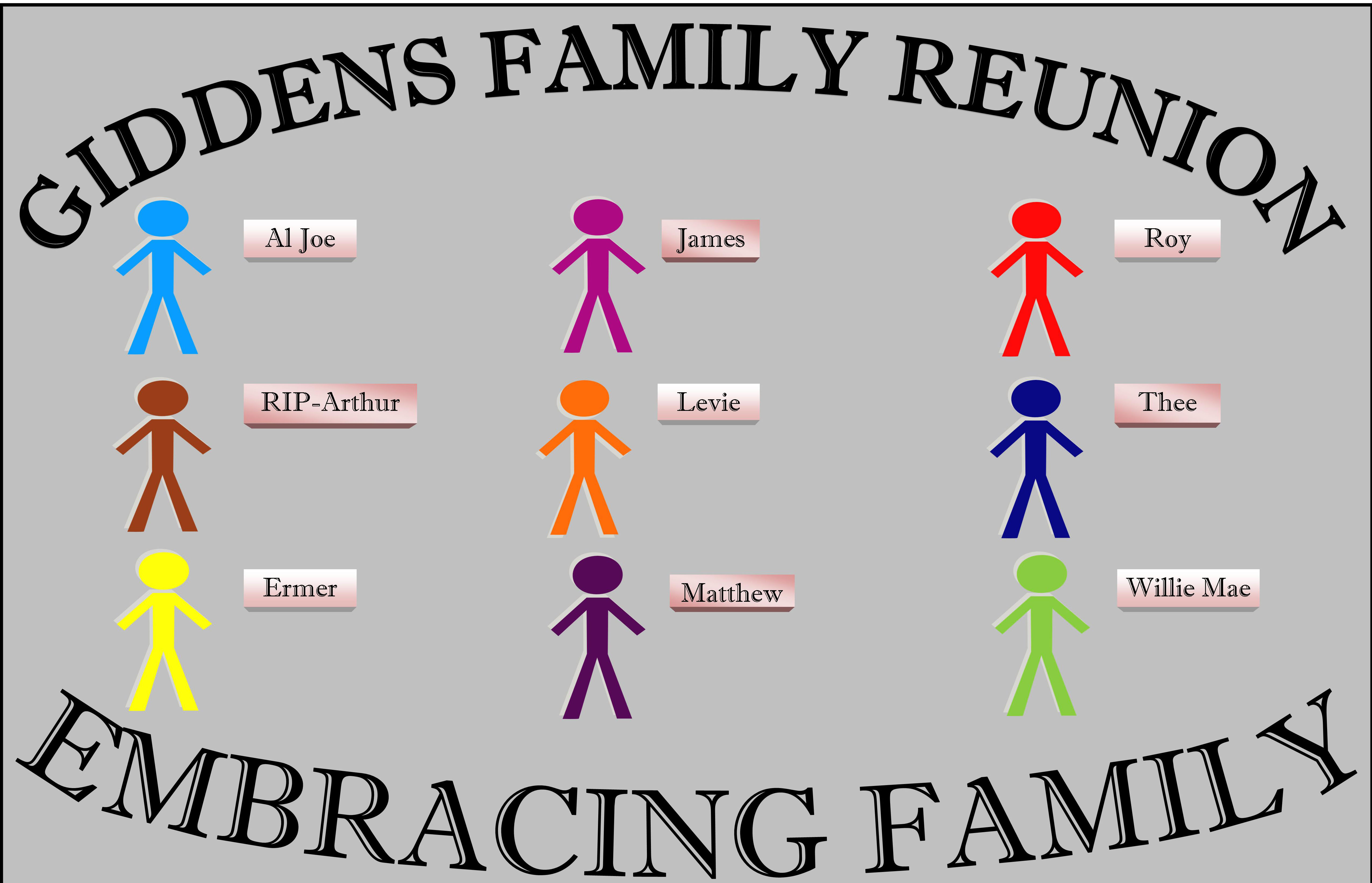
June was a spectacular month. I started my blog and posted a short story I wrote. We traveled back to Birmingham for the first Annual Giddens Family Reunion. It was attended by over 200 members of my grandmother’s family.   Family_Reunion_Poster_new This year we will have another reunion in Birmingham and then start every two years.  We have a Facebook page.  It is used to announce birthdays and unfortunately update us on illness and loss.  My grandmother was from a large family.  We lost her brother (last surviving sibling) this year.  They were a remarkable group of people and we all hope to live up to the high standards they set for us.  The first is to keep getting together to celebrate our family.

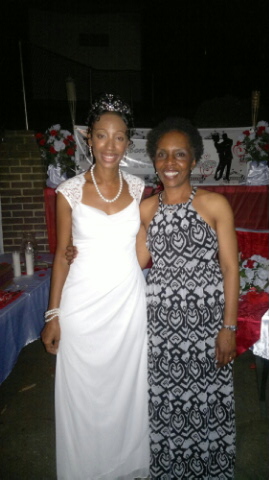
In October, my stepdaughter was married in DC at the home of her new husband.  It was 30 years ago that I met my husband (her dad) and she and her brother became a part of my life.V__F250 We spent a lovely few days in DC during the government shutdown.  All the monuments and museums were closed so we walked around and took pictures. WP_20131005_016[1]

In December, we spent a few days in Ocean City Maryland.  It was 30 years of celebrating birthdays as a family. The weather was beautiful. WP_20131201_001[1]

I saw the Christmas Spectacular at Radio City Music Hall and waded through the crowds to see the Christmas tree at Rockefeller Center. We made it to Baltimore for Christmas Dinner and the drive down was delightful.  This year there was no snow or blinding-rain.

We have celebrated 30 New Year’s Eves together.  We spent a quiet evening at home and watched “Casablanca” and “Foyle’s War.”  We received greetings from friends and family on Facebook and by text message.

Here’s to 2014.  I am going to work very hard the first few months because of projects I need to complete but I do plan to spend time catching up with old friends. I do not make resolutions but if I chose a theme or a word, it would be “Gratitude.”

Patient Care: Snow Storms

WP_20131215_002

For years, I have never let bad weather keep me from getting to the hospital and making my rounds.  When I was a resident, I was always able to get in.  I never had a snow day.  When I took a year off to practice in a small clinic in Baltimore, the staff had planned to close on a snowy day.  I made it in.  I found out that the Pharmacist lost the bet.  The “Southern Bell” had made it in.

I was always in the hospital either because I could walk or if it was bad enough I was driven in by my husband. He was dubbed “Nanook of the North and me as his “Snow Queen” by a friend and hospital administrator.  I would get the calls from my stranded colleagues and I would spring into action, going through the hospital seeing patients, writing orders and running to the ER to do the admissions.  I would spend the whole day seeing patients.  I even got special treat of free food.

One year on the eastern shore, we had to make it through the Ice storm that paralyzed the whole east coast.  I made it from the office to the hospital slowly driving behind my trusty Physician Assistant who was stuck in the office with me because we had so many patients that day.  When I got to the hospital, the ER was packed with patients who had slipped on the icy sidewalks and needed their fractures managed.  I sprang into action and  I did pre-op evaluations while the orthopedic surgeons set the fractures.  My husband and son were home.  I finally made it to my house hours later.  The next day, the hospital had volunteer drivers who could pick me up.  It was the wife of one the Cardiologist who had a four wheel drive vehicle who made it to my house.

The grocery store scene the day before a snow storm has always baffled me.  I never knew why people purchased so much bread and milk. I would go in to pick up a few things but was always afraid to get too much.   The worst year, we lost power and heat.  Living in a 100 year-old house near the Choptank River was cold.  Our friend brought us Chinese food from the local restaurant that still had power.  I was thankful that my son was not a picky eater. I had so many patients in the hospital and the beeper was non-stop with calls.  Remember in the early 90’s, cell phones were not in wide spread use.  The one I used was the old bag phone.  My car was snowed in.  My husband tried to did it out but the ice was so thick. Even when we moved to Chattanooga, I seemed to be the only one in my group who could make after the rare snow fall.

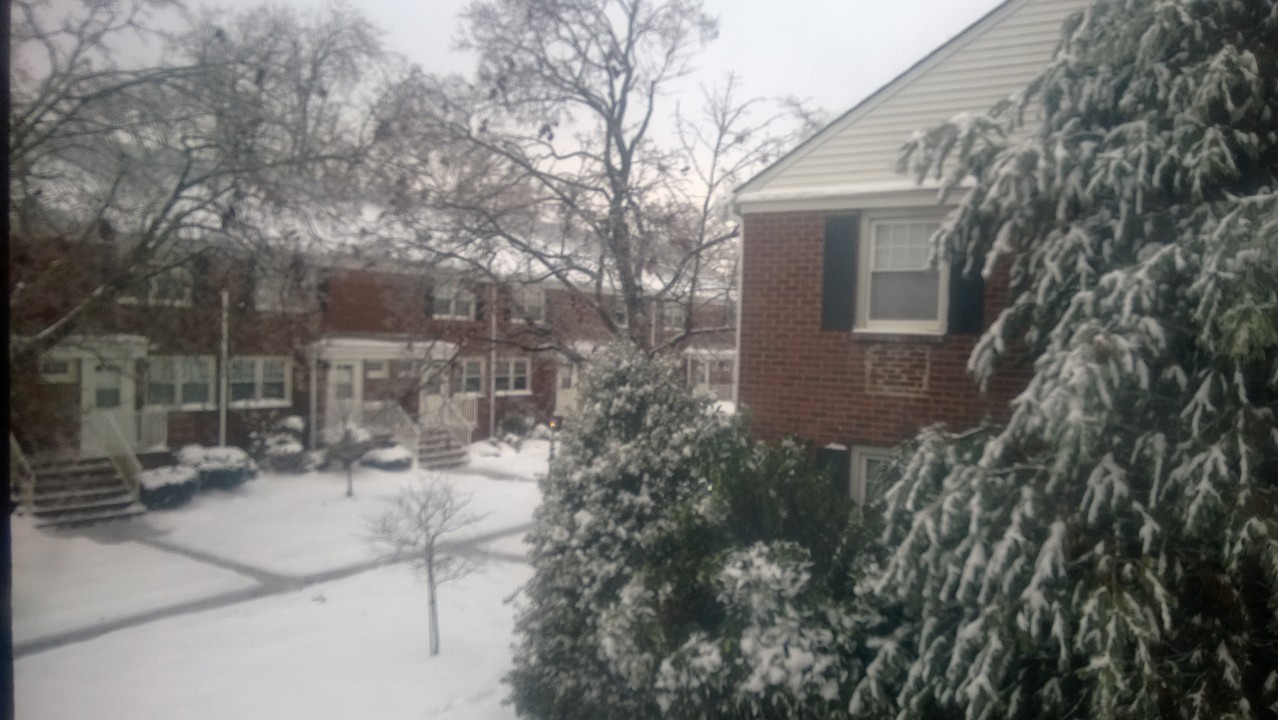
Today as I look out on the winter wonderland, I have nowhere to go.  I shopped yesterday, we have power and I have no call or patients in the hospital.  I am not worrying about how I can get into the hospital to check on patients in the ICU, telemetry, medical floors. The phone is not ring with calls from the Nursing Home.   There are no calls from stranded colleagues giving me the names of their patients that need to be evaluated.  I have no ER calls about patients needing to go to the Operating room because of fractures. So I am writing, reading and just enjoying the warmth for the first time in years.  I am going to watch episodes of “Foyle’s War” which is set in a small town outside London during World War II.  I am also going to read some medical journals, address holiday cards and make dinner.

Caring for the Ladies

I have had the privilege to be the doctor for a magnificent collection of women of all races, age-groups, socio-economic status and professions.  Seeing the trailer for “Lee Daniel’s The Butler” triggered thoughts of some of these women. I think it was the character of the wife, Gloria, played by Oprah Winfrey.   So, I wanted to start with the elderly African-American females who paraded in and out of my office like characters from a fading Jonathan Green painting.  Each still elegant though they were well into their 80’s, 90’s and even over 100.  They came in dressed in hats, gloves, stockings and carrying old purses as if they were off to church.  A close look at these garments would show the fraying material or stains that come with age.  The fading of the once brilliant colors of these garments did not diminish their elegance.

Jonathan_green2

These matriarchs were respected in the community as dedicated church members, retired teachers and sorority members (including my own).  Some had just worked in restaurants as cooks or been housewives. They were often widows or unmarried.  The widows had lost their husbands before I took over their care.  They were living proof of the shorter lifespan of the African-American male. They all had been my colleagues’ patients but they gravitated to me.

When I told them I had graduated from Meharry Medical College, they beamed with pride.  They too were graduates of Historically Black Colleges and Universities or had sent their children off to attend one of them.  Many were known as Teacher’s Colleges when they were attending them.  We shared stories because I had grown up in Birmingham and they had lived through the racial tension in their tiny community.  Most of them had children who had gone off to college and successful careers in cities from the West Coast to the East Coast and everywhere in between. When I had a problem or if they were concerned, I spoke with doctors, lawyers, college professors, business leaders and teachers.  Each one concerned about a parent, grandparent or an aunt.  Each frustrated at the refusal to leave the community and move closer to them.  When one of these ladies had an illness, they packed up and flew in to be by their side.  The reality was that they had a circle of friends and a social network; they were not willing to leave.

Each came to the office with a brown bag filled with bottles of pills from the medicine cabinet.  That was my request.  I reviewed them and they were shocked when I tossed out outdated bottles and made a new list.  I think they thought I was being wasteful when I tossed out pills but it was the safer option.  I had a group of three retired teachers who always came together.  The older one of the three was the driver.  One of the ladies experienced several episodes of blood in her urine. I had to do a vaginal examination first not easily accomplished but was necessary.  We thankfully diagnosed a benign tumor on her kidney.  She sailed through the entire ordeal. The other two cared for her and made sure she made every appointment. They were amazing.

One lovely woman came in for an examination.  I found a small mass in her breast.  It was a localized tumor.  She had no problems during surgery and recovery.  The surgeon was amazed because she had no medical problems. She too had a strong network of friends and family.  The nurses and all the staff in the hospital knew her and made sure she did well.

They were all addressed as “Miss.”  It was just what was done. Being from the south it was easy for me to continue this gesture of respect. Miss B was known for her biscuits.  She got up every morning and made the biscuits for a local restaurant.  I admit I had succumbed to the sausage biscuit sandwich which featured her biscuit.  It was a heavenly treat.  She unfortunately had a stroke and could not work.  It left her fortunately with a minor deficit.  The owner decided to keep her own just to supervise the new biscuit maker. Thankfully, she had the opportunity to pass on that skill. She was proud of her skills and proud to share.

One of my favorites was a retired nurse.  I removed several moles from her chest.  She formed a small keloid but some quick thinking by us both prevented it from being a problem. She had worked in the local hospital but before had been in a larger city.  She worked with residents and as she stated made them into good doctors.  I always knew even then that good nurses made good doctors.

Miss C had two daughters who always took her to specialist because she always complained of being sick.  They failed to see it was her way of getting them to come home to visit.  I had to intervene after several hospitalizations for medication side effects.  I called them and explained that she was just trying to get their attention.  I spoke with the Cardiologist and the Gastroenterologist.  I also required all medications to be approved by me before being taken.  I did such a good job that she begged my staff to get her brother in.  I was not taking new patients.  One of them came to me with a smile and said I had to take him.  When I asked “Why?” the answer left me nearly speechless.  I quote” All he has to do is touch the hem of her garment and I know he will be healed.  That woman was sent here by God to care for us.” A little embarrassed I said “Then I have to see him.”  They all laughed and so did I.  Unfortunately, I did not heal him but he did have good care.

Miss LR was over 100.  She always came in smiling and dressed for church.  She did make it past 102.  She developed an anemia after all those years that required blood transfusions but they caused Congestive Heart Failure.  The Hematologist just smiled and said he thought her bone marrow just “pooped out.”  A medical term for; “I do not know why but we better not try too hard to find out or we could really kill her.”  She eventually had to go to the local nursing home but she was cared for with love.  Everyone who worked there knew her and care for her with respect.  She was showered with hugs every day.  I think she made it to 103. It was a great day when her funeral was held.

Miss M  was another dear patient.  She was blind from glaucoma.  She lost her beloved husband and never recovered.  They were a cute little couple. She would call the answering service saying she woke up and couldn’t see.  These were panic attacks. I would take her calls and calm her down. One hot summer, we gave her an air conditioner.  We made her use it and had her utility bills taken care of.  There were funds for that back then.  She would die in the hospital.  She just stopped eating.  I even had a feeding tube placed and that was a decision I later regretted.

The church and community played an important role in their lives and their longevity. However, for each there was one illness that would lead to decline despite flu shots, pneumonia shots and careful monitoring of blood work and medications.  They each touched my life and shaped my medical career.  I was honored that they allowed me to be their doctor.

What does Stress have to do with it?

I tripped, almost fell and ended up in the Emergency Room.  This reminded me that stress has everything to do with it.  What is stress?  Dr. Andrew Weil offered this definition “Psychological stress can best be defined as emotional strain or tension in response to a particular event, behavior, place or person.”

Stress has always been my undoing.  I felt it most during my 6 years of practice on the Eastern Shore.  The bigger the practice became the more apparent it became to me that I was being stressed.  I never complain; I just work. The beginning of my second year in practice, I was offered the office of a doctor who was leaving practice to retire to his sailboat.  I decided to invite the doctor I was practicing with to join me in the venture.  This was against the advice of my husband.  I felt sorry for him.  That was my first mistake that lead to an increase in stress.  I enjoyed the patients and I found refuge in seeing 30/day.

My first reaction to stress was a severe sinus infection.  It came at the worst time.  With two practices to manage and being on call with no back-up, I just did it.  I took my antibiotics and ibuprofen.  Thankfully, I did not have to be admitted to the hospital for sinus drainage.  I had to go inside myself and just relax and meditate. I know it was all due to stress. As I relaxed my sinuses opened and I was better.

The next time I reacted to stress was an angry outburst with my partner.  It ended with our business manager saying we were both right. I yelled “No, I am the only one who is right.”  We had just renovated our office after acquiring the office of a retiring physician. We knocked out the walls and expanded our office and exam rooms.   As per the Dalai Lama “The energy of anger should be suspect to caution. It can inspire behavior that is terribly destructive and unfortunate.”

My stress, I realize now was never from caring for the patients.  It was from the business of Medicine.  Dealing with the hospital, my colleagues and yes my partner.  To manage  all of this, I exercised.  I had morning walks with my neighbor who was a licensed clinical social worker (LCSW).  We shared patients and were friends.  I cared for her family.   This was possibly my bartered therapy sessions.  I had the privilege of caring for her beloved husband during his heart attack and subsequent stroke.  He did well.

I left that practice and lost a lot financially but found my calm.  I still deal with stress through exercise but now yoga and meditation are the keys to my ability to find balance. I have been practicing yoga for 11 years.  Yoga helped me rehabilitate a shoulder and a back injury after a fall.  That too was related to stress.  I was dealing with commuting to Brooklyn and working for yet another stress producing colleague.

quadtear

This fall and a now diagnosed quadriceps (thigh muscle) strain is the result of thinking about a meeting, grabbing my purse and tote and mindlessly running down the stairs to get to work early. However, I ended up in the ER.  I saw a colleague who is a Sports Medicine Specialist. He performed an Ultrasound right in the examination room. He recommended Physical Therapy and yes Yoga.   The stress of trying to multitask and dealing with the business part of medicine was a distraction. I want to say that I do love the business part.  I am a clever and persistent so I manage to always get the best for my patients and my staff.  Thankfully, still enjoy he patients.  I have mastered the business part. I have learned never to resort to the wasted energy of anger. So I have spent the past day and a half meditating and reconnecting with my inner calm and finding my balance.

Caring for Uninsured Patients: Help is on the Way

When I launched my private practice, it was on the Eastern Shore of Maryland in a small town.  I joined a physician who had been in practice for several years.  I managed to keep my schedule light for a few weeks so I could study for my Board Examination.  I had just finished my residency training but I was no stranger to outpatient practice.  After my return from the exam which I opted to take in Orlando, I never saw fewer than 20 patients a session.  The busiest days saw us seeing 30 or more patients.  I admit that many walked in but most were scheduled.  This was in early 90’s which was the beginning of the rise of HMO’s.  My practice was hospitable- sponsored.  In less than 1 year, I had repaid the hospital the loan and started to make a profit.  Many of my patients were uninsured but a significant number were Medicaid, Medicare and HMO. I welcomed the Clinton Health Plan and even was interviewed by local newspapers.  Sadly, for my community, it never happened.

The Affordable Care Act (ACA) will change the number of uninsured patients in the US.  While I was on the Eastern Shore in the 90’s, it was apparent that many of the residents had no way out of the cycle of poverty and the health problems neglected from being uninsured.  The reality played out in the Emergency Room of the local hospital day and night.  Being uninsured affected every family. Our community had business owners who were farmers, fisherman, mechanics, contractors and shop owners.  Many made too much money for Medicaid but they could not afford the cost of private insurance.  Many of them landed in the ER with serious medical conditions they had ignored.  Some even called my office and were seen as emergency visits.  One particular case was a bit scary.  One of my staff called and brought her brother in.  He was complaining of chest pain and would not go to the ER. They came to the office and I did an EKG.  To my surprise the brother was having an acute myocardial infarction.  He was uninsured and was still refusing to go to the ER even as the ambulance arrived.  We did get him there.  He and I had a tense ambulance ride together to the tertiary care hospital and I handed him off to the cardiologist who greeted us both and whisked him off to the Cardiac Intensive Care Unit.  Weeks later, the community came together for a fund-raiser.  I attended and was to my surprise honored by everyone for my excellent care.  Unfortunately, I had to leave to go to the ER to care for a patient that was not so fortunate.

I had hoped that the HMO’s would make healthcare affordable but that did not happen.  The reality for patients then and now is that if you lack insurance, you end up in the ER.  I worked with the local health department.  My office was ground-zero for many programs.  We saw patients enrolled in the Breast and Cervical Cancer Screening Program, Vaccines for Children and participated in every pharmaceutical company sponsored free medication program. We saw patient from the Mental Health programs, Drug treatment programs, and Adult Daycare.  My practice had so many patients enrolled in Pharmaceutical Company Patient Assistance Programs; one company invited me to give a presentation to a group of providers.

I was a member of the steering committee and a board member of the new Federally Qualified Community Health Center (FQHC) in our town. It was our answer to tacking the rate of uninsured patients.  It was hard work to get the grant written, not by me thankfully but I did read it and had to give input on the clinical operation.  I also had to pledge my service which meant clinical sessions, on call coverage and hospital admissions.  I was also involved in recruiting the first full-time provider.  We were fortunate to be designated a National Health Service Corp (NHSC) site.  This allowed us to recruit a NHSC scholar who could use our site and a 3-year commitment to repay medical school loans. The good news is that built into the Affordable Care Act is increased funding for the NHSC.  The program is now expanded and will allow an increase in primary care providers in areas where they are needed.  We were fortunate to get a brilliant young Family Physician in our community. The CHC is still there but it is now part of a bigger network. Across the US, FQCHC are providing care to uninsured and under-insured patients.

Medicine for me has always been about helping my patients. The Affordable Care Act is going to change the delivery of medical care in the US.  I am gearing up for all the excitement.  I work now as a Medical Director for Student Health Services at a major university.  All fulltime students are required to have insurance either through their parents or a plan that is sponsored by the school. The plan is also available to part-time students.  It is very affordable for students.  My task is to help students be informed about what is covered and how to access care using the insurance plan. The Affordable Care Act requires that the policy meets all the same criteria as plans to be provided by other plans.  It must provide preventive services, emergency care and coverage of medications.  There is no restriction for preexisting conditions.   The next dilemma will be if there is the capacity to care for all of the patients.

Reflecting on the SCOTUS Rulings: My Own Brush with Making History

The Supreme Court rulings on DOMA and Proposition 8 were a great moment in history.  When I lived on the eastern Shore, I had the privilege to care for a large number of patients infected with HIV.  Many were homosexual males. At that time I was among an elite group of doctors who were Family Physicians and “AIDS Doctors” as we were called then. I had trained in New Jersey. I had several patients with AIDS in my residency training.   They were both heterosexual males and females and homosexual males. Many of my patients had suffered in silence with being gay and then had the added stigma of AIDS.

I really did not choose to be the primary provider for these patients.  They found me.  I had gained a reputation because of my patients.  Word was spreading and patients were calling.  We scheduled each patient  so they could come to the office without fear of being found out.  This was not easy  in a small town.  Everyone prided themselves on knowing everyone one’s business.  I have forgotten many of the secrets I dared not write in my charts. That is a good thing.  One of my patients was openly gay and he contributed to my reputation.  He was flamboyant and so much fun.  My favorite encounter came was when I told him his CD4 count and he fainted.  We made a deal that I would only tell him if there was a change that was significant.  That made our lives a little easier.  My nurse was especially happy.

He met and fell in love with another patient of mine.  They were as different as night and day, a modern-day Rhett and Scarlet.  One was a tall African-American male who gave the appearance of being fearless and the other a White male who  fainted.  Together they contributed to changing AIDS care on the Eastern Shore.  They became tireless advocates for patients and families. The two of them dealt with their illness in such different ways. Like many African-Americans, the one patient was diagnosed after a major illness which left some neurological deficits. That did not matter.

They invited me to the blessing of their union.  The priest who performed the ceremony was later stripped of his position. He was accused of performing a marriage.    We were all there and the celebration was beautiful.  It was a blessing of two courageous men. Here is a link to the article: http://articles.baltimoresun.com/1995-06-10/news/1995161005_1_priest-bishop-easton. Fortunately when I left, they started seeing my colleague outside Philadelphia.  She is still a Family Physician who cares for patients living with HIV/AIDS.

The SCOTUS decisions on Wednesday July 26, 2013 made me reflect on that time.  We have come a long way.  Lisa Winkler’s blog entry  SCOTUS & I Am Harvey Milk: Perfect Timing was so moving; it caused me to reflect on my own moment in history.  At the time, I was just being a good doctor and an advocate for two courageous human beings.  I still at that time had to worry about my personal reputation and the practice.  I still had patients who would not have been supportive of our being there. When I attended the marriage of my two friends on Staten Island last year, in a beautiful marriage ceremony, I had no fear of loss of patients or revenue.  Thankfully, I may never have to experience that again.

Anastasia: A Tribute to a Lady

The First Office Visit:

“Hello, I am here to get this drained.  My doctor said I didn’t have to drive back to Baltimore if you could do it.”

She explained that she needed the fluid collection drained from her mastectomy site.  The surgeon in Baltimore said any doctor could perform the procedure.  Anastasia was her name.  She felt too tired to drive to Baltimore again this week.  I did not have time then to review her chart.  I took out a needle and syringe. I cleansed the area carefully with betadine and took off 20 cc of fluid.  She thanked me and left.  I would perform this procedure several more times in the next month.  She would sit there very poised without any expression of pain.  During that time we formed a bond. I learned she had a daughter around the same age as my son.  Her husband had died a few years ago. She was teaching school this summer for the Migrant Program and had plans to return in the fall to a full schedule.  I would later meet her long time friend who would provide support for Anastasia’s daughter and mother through the long ordeal.

That first time in the office, I noticed her beauty and her battle scars.  She had her head tied with a beautiful scarf to hide the loss of hair from chemotherapy.  Her makeup applied to perfection to camouflage her ashen skin.  She carried strapped to her waist an infusion pump for continuous chemotherapy.  The beautiful outfit she wore hid her thinness.  I imagined that before all of this she had been stunning even more stunning than she was even now.   Her friend accompanied her to some of the visits.  She showed a warm and supportive spirit each time I met her.  She and Anastasia taught at the same school.  She would be the one to suggest that we get help for Anastasia’s daughter and I arranged this with one of the best psychologists in the area.  She was obviously holding back the tears.  She had the special role of godmother and took it seriously.

I realized after two years in private practice that I did not feel prepared to assist and comfort patients when dying was the only outcome.

Her Story:

I later learned her story and knew that I was embarking on a long journey with this woman. She was the pride of her family and community.  Everyone who knew her loved her.  Anastasia was fighting a battle with recurrent breast cancer. She had won over 6 years before.  During the time of remission she had a child, a beautiful little girl that she adored.

Anastasia continued to see me even after her wound healed.  She had been my partner’s patient.  I felt an immediate kinship with her.  I knew that I had been chosen for the task of helping her to die with dignity.  She was not ready to admit defeat and neither was I.  Meeting her mother was difficult.  She made it clear she was not ready to lose her only daughter.  She represented all her hopes and dreams.  No mother ever dreams that their child will die before them.  For this mother, death would bring with it the responsibility raising her grandchild.  Each of our encounters would clarify her fears.  Her daughter was a perfectionist.  Her grandchild was not deprived.  She was not sure if she could live up to her daughter’s dreams for this child.

“What am I going to do?  This is not fair.  God’s will be done.”

The next few months were emotionally draining for me.  However, I learned so much about myself.  I grew from Anastasia strength and courage.  She challenged my empathy and removed the fear I had about allowing myself to care.

“ You have to help her.”  I can’t stand to see her suffer.”  Anastasia’s mother came to depend on me.  She was frightened when she witnessed her daughter’s seizure and learned she had a metastatic brain tumor.    She accompanied her to radiation treatments.  She and I took over more of the decision-making as her child weakened.  We were prepared but reluctant to make the final decision to not resuscitate her daughter at the end.  Physicians do not admit easily that their patients are terminal.  Oncologists have the hardest time.  Prior to and after the seizure we were fighting the HMO to allow Anastasia to enter the clinical trial using Taxol.  They finally agreed but realistically it was too late for her from the start.

The Final Days:

I was leaving on vacation the Monday before Christmas.  My colleague kept saying she hoped Anastasia died before I left.  I knew what she feared: if I left before Anastasia died, the responsibility would fall to her  to deal with Anastasia’s final moments. I had become for Anastasia’s mother a strong support, almost like a daughter.  I knew I had to make the transition back to myself and sever the ties before I left.  Anastasia died the week before I left.  She was admitted to the hospital.  I pushed for her to die at home with Hospice. Her mother could not sit home alone and watch her child die.   Instead, she died in a hospital bed.  Her friends and family were there.  The continuous morphine drip kept her free of pain.  She drifted into a deep sleep. Her family was emotional.  I allowed them stay in her room until she departed.    All who knew her loved her.   I was in the office when she died on Monday.  I walked over to the hospital to pronounce her and complete the death certificate.  Anastasia’s funeral would be on Saturday.

It was a cold day.  I was on call the day of the funeral.  I asked the operator to hold my calls unless they were urgent. I got there late. I hoped to sneak in the back of the church.  When I walked in the door, Anastasia’s mother grabbed my hand and held on tightly.  She wanted me to sit with the family.   She was so beautiful and still on the satin drapes of the gray casket.   Her make-up was to perfection.  Her beautiful black dress and hat transformed her.  In the distance she was radiant.  The soloist sang softly “Don’t cry for me.”  Her long time friend and high school classmate who was now a Methodist minister gave the eulogy. “She inspired all who knew her to reach for their highest goals.  She did so herself.  We who knew her will miss her.  Those who supported her in her time of greatest pain are overjoyed that she is in God’s hands.”

The soloist sang, “I am going to better place.”  We all knew she was there as we looked at her peaceful face.  No sign of the terrible pain she had just before coming into the hospital.

The Superintendent of Schools, city council members, friends and family from across the United States, attended the funeral.  Many of her friends and classmates were still living in town and I immediately recognized them as my patients and colleagues from the hospital.  They paid tribute to her as an alumnus.

The Farewell:

“Don’t cry for me.” They cried.  I cried.  I could not go the graveside service.  I was drained and on call.  I couldn’t bring myself to watch the final ceremony.  I had seen it so many times.  My grandfather was eighty and my father-in-law was seventy at the time of their deaths.  Anastasia was going too early.  I went home. In the car, I realized that this had been a revealing experience.  I could only hope that my own funeral would be so full of celebration of life and regret for the loss.  I knew she was in a better place.  Free of the pain, rid of the dreadful disease and as beautiful as she had been before the cancer. I felt Anastasia was pleased with our performance.  It would take us all to support her mother and her child.  I would be there for several years. I will always stay in touch with them no matter where I go.

I hugged my child when I got home. I answered my calls and started to pack for my vacation.  I was ready for the drive to Birmingham.  I would be seeing my own mother for the first time in months. When we finally got in the car and crossed the bridge, I sighed with relief and slept as my husband drove.  The music was soothing.  My mother would be there to comfort me.